Electrolyte Test Meaning in Hindi: Sodium, Potassium Ka Matlab
Electrolyte test report ka simple Hindi guide: sodium, potassium, chloride, bicarbonate, dehydration, vomiting, kidney risk, fasting, doctor review, and emergency signs.
Vomiting, loose motions, garmi, fever, kidney report, ya weakness ke baad jab electrolyte test mein sodium ya potassium high/low mark hota hai, toh family ko usually do confusion hoti hain: "Kya sirf ORS se theek ho jayega?" and "Kya potassium dangerous hai?" Problem yeh hai ki electrolyte report useful clue hai, but it is not a self-treatment instruction.
Fast rule: electrolyte report ko sodium, potassium, chloride, bicarbonate, kidney function, urine output, medicines, and symptoms ke saath read karein. Confusion, fainting, seizure, chest symptoms, repeated vomiting, very low urine, severe weakness, or rapid worsening ho toh routine report-review appointment ka wait na karein.
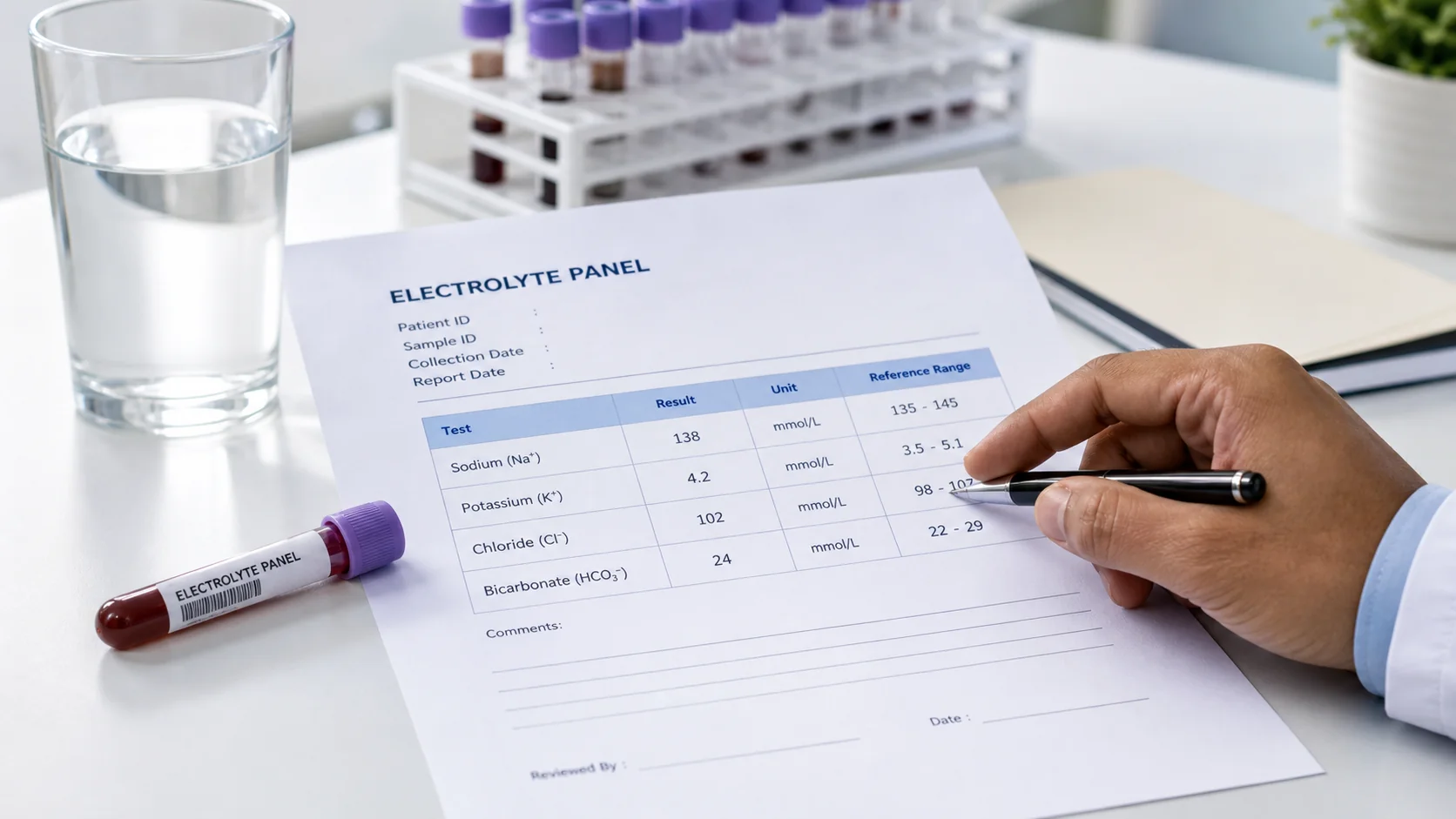
This guide is patient education, not diagnosis or prescription. Salt water, ORS, potassium supplement, IV fluid, diuretic medicine, BP medicine, kidney medicine, or admission decisions patient-specific hote hain. Apni report dekhkar khud se dose, fluid amount, or medicine change karna unsafe ho sakta hai.
Electrolyte test kya hota hai?
Electrolyte test ek blood test hai jo body ke important charged minerals ko measure karta hai, commonly sodium, potassium, chloride, and bicarbonate/carbon dioxide. Yeh minerals body fluid balance, acid-base balance, nerve signals, muscle function, and heart rhythm ke liye important hote hain.
Electrolytes are minerals in body fluids that carry an electrical charge. MedlinePlus explains that an electrolyte panel can check the body's main electrolytes and that an anion gap test may be used when acid-base balance is a concern. The NHS electrolyte test guide describes electrolyte testing as a blood test used to check for imbalance in salts and minerals such as sodium, potassium, chloride, and bicarbonate.
Doctor electrolyte report ko akela nahi dekhte. Usually yeh context important hota hai:
- vomiting, diarrhea, fever, sweating, poor intake, or heat exposure
- urine output: normal, low, very low, or stopped
- kidney function report: creatinine, urea/BUN, eGFR
- current medicines, especially BP tablets, diuretics, diabetes medicines, painkillers, or supplements
- heart disease, kidney disease, diabetes, elderly age, pregnancy, or recent surgery
- symptoms: weakness, cramps, dizziness, confusion, palpitations, drowsiness
Sodium, potassium, chloride, bicarbonate ka kya role hota hai?
Electrolyte panel values different jobs batate hain, isliye one abnormal number se final meaning clear nahi hota. Sodium mainly fluid balance se linked hota hai, potassium muscle and heart rhythm context mein important hota hai, chloride fluid/acid-base balance mein help karta hai, and bicarbonate acid-base pattern ka clue de sakta hai.
| Report value | Simple role | Doctor kya compare karte hain |
|---|---|---|
| Sodium (Na) | Fluid balance, nerve and muscle function | Dehydration, excess water, medicines, kidney/heart/liver context |
| Potassium (K) | Muscle function and heart rhythm support | Kidney function, ECG need, vomiting/diarrhea, medicines, supplements |
| Chloride (Cl) | Fluid and acid-base balance | Sodium/bicarbonate pattern, vomiting, dehydration, kidney status |
| Bicarbonate / CO2 | Acid-base balance clue | Breathing pattern, kidney function, diabetes/ketone concern, illness severity |
| Anion gap | Acid-base pattern calculation in selected reports | Doctor decides if further evaluation is needed |
MedlinePlus describes sodium and chloride as electrolytes that help control fluid and acid-base balance in the body. Cleveland Clinic's electrolyte panel overview also notes that dehydration can cause electrolyte imbalances and that other blood tests may be needed to understand why a level is high or low.
Electrolyte imbalance ke symptoms kya hote hain?
Electrolyte imbalance symptoms depend on which electrolyte is high or low, how fast it changed, and the patient's age, kidney function, medicines, and illness severity. Common symptoms can include weakness, cramps, dizziness, nausea, vomiting, confusion, palpitations, numbness, tingling, fatigue, or low urine.
Do not use symptoms to diagnose the exact electrolyte at home. Many symptoms overlap with dehydration, fever, sugar problems, kidney issues, infection, anxiety-like symptoms, and medicine side effects.
Symptoms that should be taken seriously include:
- severe weakness, inability to stand, or sudden worsening fatigue
- confusion, drowsiness, fainting, seizure, or unusual behaviour
- palpitations, chest pain, breathlessness, or very fast/irregular heartbeat
- repeated vomiting or severe diarrhea
- very low urine, stopped urine, or severe dehydration signs
- muscle cramps with dizziness, low BP feeling, or heat exposure
- numbness, tingling, severe headache, or rapidly worsening illness
Cleveland Clinic's electrolyte imbalance guide advises calling a healthcare provider for changes in heart rate, extreme fatigue, prolonged diarrhea or vomiting, dehydration signs, confusion, muscle cramps, numbness, or tingling.
Vomiting, diarrhea, fever, or heat mein electrolyte test kab useful hota hai?
Electrolyte testing can be useful when fluid loss is significant, symptoms are severe, urine output is low, or the patient has higher-risk conditions. Vomiting, loose motions, fever, heat exposure, heavy sweating, poor intake, and some medicines can disturb fluid and electrolyte balance.
Mayo Clinic notes that severe diarrhea and vomiting can lead to loss of water and electrolytes in a short time, and fever can worsen dehydration risk. The NHS dehydration guidance also explains that oral rehydration solutions contain sodium and potassium salts with glucose or starch, and patients should ask a pharmacist or GP for advice about the right solution.
Use this practical decision table:
| Situation | Why electrolyte review may matter | Safer next step |
|---|---|---|
| Mild weakness after heat, patient alert, drinking, passing urine | Mild dehydration may be possible | Monitor and seek doctor guidance if not improving |
| Vomiting or loose motions repeatedly | Sodium/potassium/fluid loss can occur | Same-day doctor review, especially if intake is poor |
| Very low urine, confusion, fainting, severe weakness | Possible serious dehydration or organ stress | Emergency care now |
| Kidney/heart disease or elderly patient | Fluid and electrolyte changes can become riskier | Do not self-treat aggressively; seek medical guidance |
| Potassium marked high/low with palpitations or weakness | Heart rhythm context may matter | Urgent medical assessment |
If the main issue is dehydration symptoms, read dehydration symptoms in adults in Hindi. If fever is part of the illness, viral fever lakshan in Hindi can help you prepare the symptom timeline. If the patient is getting chakkar, faint feeling, or "low BP" symptoms with vomiting, diarrhea, heat exposure, or low urine, use the low BP symptoms in Hindi guide to decide when urgent assessment is safer.
Electrolyte test ke liye fasting zaroori hai?
Routine electrolyte blood test ke liye fasting usually zaroori nahi hoti. But fasting instructions depend on what other tests are ordered with it. If electrolyte test is part of a health package with fasting sugar, lipid profile, or ultrasound instruction, follow the lab or doctor's advice.
Before the blood sample, tell the doctor or lab if:
- vomiting, loose motions, fever, sweating, or poor intake is ongoing
- urine output is low or patient feels dizzy/faint
- IV fluids, ORS, supplements, or high-salt drinks were taken recently
- BP medicines, diuretics, kidney medicines, painkillers, diabetes medicines, or steroids are being used
- kidney disease, heart disease, liver disease, diabetes, pregnancy, or elderly age applies
- previous sodium, potassium, creatinine, sugar, urine, or ECG reports are available
For a wider report-review visit, use the OPD visit documents checklist and carry all related reports, not only the electrolyte screenshot.
Electrolyte report high ya low ho toh kya karein?
High or low electrolyte values should be reviewed with a doctor because the right next step depends on symptoms, kidney function, medicine history, and the exact value pattern. One patient may need repeat testing; another may need ECG, IV fluids, medicine review, admission, or urgent treatment.
Avoid these unsafe shortcuts:
- high sodium dekhkar plain water bahut zyada rapidly peena
- low sodium dekhkar salt tablets or extra salt start karna
- low potassium dekhkar potassium supplement self-start karna
- high potassium dekhkar home remedies try karna instead of urgent review
- vomiting/diarrhea mein antibiotics, anti-vomiting, or loose-motion medicine self-start karna
- kidney or heart patient mein ORS/electrolyte drinks repeatedly lena without guidance
- BP/diuretic/diabetes medicines stop or double karna without doctor advice
If creatinine or kidney function is also abnormal, read creatinine high meaning in Hindi. If the report is part of a larger health checkup, start with the blood test report guide.
If sodium or potassium is printed beside creatinine, urea/BUN, or eGFR, use this focused KFT test meaning in Hindi guide to understand how kidney function and electrolyte values are reviewed together.
Doctor ko electrolyte report dikhate waqt kya le jayein?
The fastest useful consultation happens when the doctor can see why the test was done and what changed before the sample. Electrolyte reports are especially context-dependent because food intake, fluid loss, medicines, kidney function, and IV fluids can change interpretation.
Carry or note:
- electrolyte report with units and lab reference range
- creatinine/KFT, urea/BUN, sugar, CBC, urine routine, LFT, and old electrolyte reports if available
- symptoms: weakness, cramps, dizziness, vomiting, loose motions, fever, low urine, confusion, palpitations
- fluid-loss timeline: vomiting count, loose motion count, fever readings, heat exposure, sweating
- current medicines and supplements, especially BP medicines, diuretics, potassium/calcium/vitamin products, painkillers
- kidney, heart, liver, diabetes, pregnancy, elderly-care, or recent surgery history
- whether ORS, IV fluids, antibiotics, steroids, or emergency medicines were already given
This doctor consultation preparation checklist gives a quick format for symptoms, reports, and questions. If medicine names are confusing, use medicine list for doctor visit.
Electrolyte imbalance mein emergency signs kaunse hain?
Electrolyte imbalance becomes urgent when the patient looks clinically unwell, has heart/brain symptoms, or is losing fluids faster than they can safely replace them. Do not wait for a routine appointment if the condition is rapidly worsening.
Seek emergency care now if there is:
- confusion, drowsiness, fainting, seizure, or difficult-to-wake state
- chest pain, breathlessness, palpitations, blue lips, or severe sweating
- severe weakness, collapse, inability to stand, or very fast worsening
- repeated vomiting, severe diarrhea, blood in stool, or severe abdominal pain
- very low urine, stopped urine, or severe dehydration signs
- high fever with drowsiness, rash, stiff neck, bleeding, or rapid worsening
- kidney disease, heart disease, diabetes, pregnancy, elderly age, or child with worsening symptoms
- potassium marked high/low and patient has weakness, palpitations, chest symptoms, or ECG concern
For emergency flow, read what happens in a hospital emergency room. If severe weakness follows vomiting or diarrhea, the dehydration symptoms guide can help families recognize why low urine and confusion should not wait.
RK Hospital mein electrolyte test aur report review
R.K. Hospital, Indrapuri, Bhopal provides electrolyte blood testing, pathology support, physician consultation, emergency assessment, and report review for dehydration-like symptoms, vomiting, diarrhea, kidney/sugar concerns, and weakness. The useful goal is to decide whether the patient is stable, needs repeat testing, medicine review, ECG, IV fluids, observation, admission, or safe follow-up.
At R.K. Hospital, patients can access:
- pathology testing for sodium, potassium, chloride, bicarbonate/CO2, kidney function, sugar, CBC, urine routine, and related reports
- physician consultation for weakness, dizziness, vomiting, diarrhea, fever, dehydration-like symptoms, and report interpretation
- emergency assessment for confusion, fainting, severe weakness, very low urine, chest symptoms, or rapid worsening
- IV fluid support, observation, and admission when clinician assessment finds it necessary
- follow-up guidance based on report trend, symptoms, age, medicines, and chronic illness risk
For stable report review, call 0755-4260605, visit the contact page, or review available hospital services. For severe symptoms, go to the nearest emergency department immediately.
Frequently Asked Questions
Electrolyte test kya hota hai?
Electrolyte test ek blood test hai jo sodium, potassium, chloride, aur bicarbonate jaise minerals ko measure karta hai. Doctor ise dehydration, vomiting, diarrhea, kidney function, medicines, and symptoms ke saath interpret karte hain.
Electrolyte imbalance ke symptoms kya hote hain?
Electrolyte imbalance mein weakness, cramps, dizziness, confusion, vomiting, low urine, palpitations, severe fatigue, numbness, or seizure jaise symptoms ho sakte hain. Symptoms severe ya rapidly worsening hon toh urgent care lein.
Electrolyte test ke liye fasting zaroori hai?
Routine electrolyte blood test ke liye fasting usually zaroori nahi hoti, lekin agar electrolyte test ke saath fasting sugar, lipid profile, or health package tests hain toh lab ya doctor ki fasting instruction follow karein.
Electrolyte report high ya low ho toh kya karein?
Electrolyte report high ya low ho toh khud se salt, ORS, potassium supplement, ya medicine change na karein. Report ko symptoms, kidney function, urine output, medicines, and doctor examination ke saath review karwana chahiye.
Electrolyte imbalance mein emergency kab jaana chahiye?
Confusion, fainting, seizure, severe weakness, chest pain, breathlessness, palpitations, very low urine, repeated vomiting, severe diarrhea, drowsiness, or rapid worsening ho toh emergency care lein.
Bottom line
Electrolyte test sodium, potassium, chloride, and bicarbonate jaise minerals ka useful blood report hai, but diagnosis nahi. Report ko dehydration, vomiting/diarrhea, fever, kidney function, urine output, medicines, and symptoms ke saath interpret karna chahiye. High/low value dekhkar self-treatment na karein.
R.K. Hospital, Indrapuri, Bhopal mein electrolyte test, kidney/sugar reports, physician consultation, pathology support, and 24/7 emergency support available hai. Call 0755-4260605 for report review or urgent guidance.
Read the report or prescription in context
A laboratory result or scan is one part of an assessment. Reference ranges vary by method and laboratory, and an out-of-range number does not by itself identify a disease. A clinician interprets the complete report alongside symptoms and previous results.
Lab tests, scans and understanding a report: preparation, interpretation and questions to askRelated Pages on R.K. Hospital
Read Next
- Bilirubin Test Meaning in Hindi: Total, Direct, Indirect SamjheinDiagnostics · 8 min read
- CBC Test Meaning in Hindi: Hb, WBC, Platelet Ka MatlabDiagnostics · 12 min read
- Creatinine High Meaning in Hindi: Kidney Report Kaise SamjheinDiagnostics · 8 min read
- CRP Test Meaning in Hindi: C-Reactive Protein High Ho Toh Kya SamjheinDiagnostics · 10 min read
- ESR Test Meaning in Hindi: Report High Aaye Toh Kya SamjheinDiagnostics · 11 min read
Need a Doctor in Bhopal? Talk to R.K. Hospital
This article is for general information only and does not replace a consultation. Call, WhatsApp, or walk in 24x7 at R.K. Hospital, Indrapuri, near Bima Hospital.
226, C-Sector, Indrapuri, Raisen Road, Bhopal (M.P.) 462022 · Directions & timings · 24x7 Emergency