Dehydration Symptoms in Adults in Hindi: Emergency Kab Banti Hai
Adults mein dehydration ke signs: gehra peshab, chakkar, sookha muh aur kamzori. Ulti-dast ya garmi mein kab risky hai aur 24x7 emergency in Bhopal kab aayein.
Garmi, fever, loose motions, vomiting, fasting, travel, diabetes, kidney issues, ya busy workday ke baad paani ki kami ko log aksar "thoda weakness hai" bolkar ignore kar dete hain. Problem yeh hai ki dehydration mild tiredness se start ho sakta hai, but severe cases mein low urine, dizziness, confusion, fainting, kidney stress, or emergency admission tak baat pahunch sakti hai.
Fast rule: dehydration ko sirf pyaas se judge na karein. Urine kitna aa raha hai, urine ka colour, dizziness, vomiting/diarrhea, fever, heat exposure, age, pregnancy, diabetes, kidney/heart disease, and mental alertness together dekhein. Agar patient confused, faint, breathless, repeatedly vomiting, very weak, or urine bahut kam pass kar raha hai, routine OPD ka wait na karein.
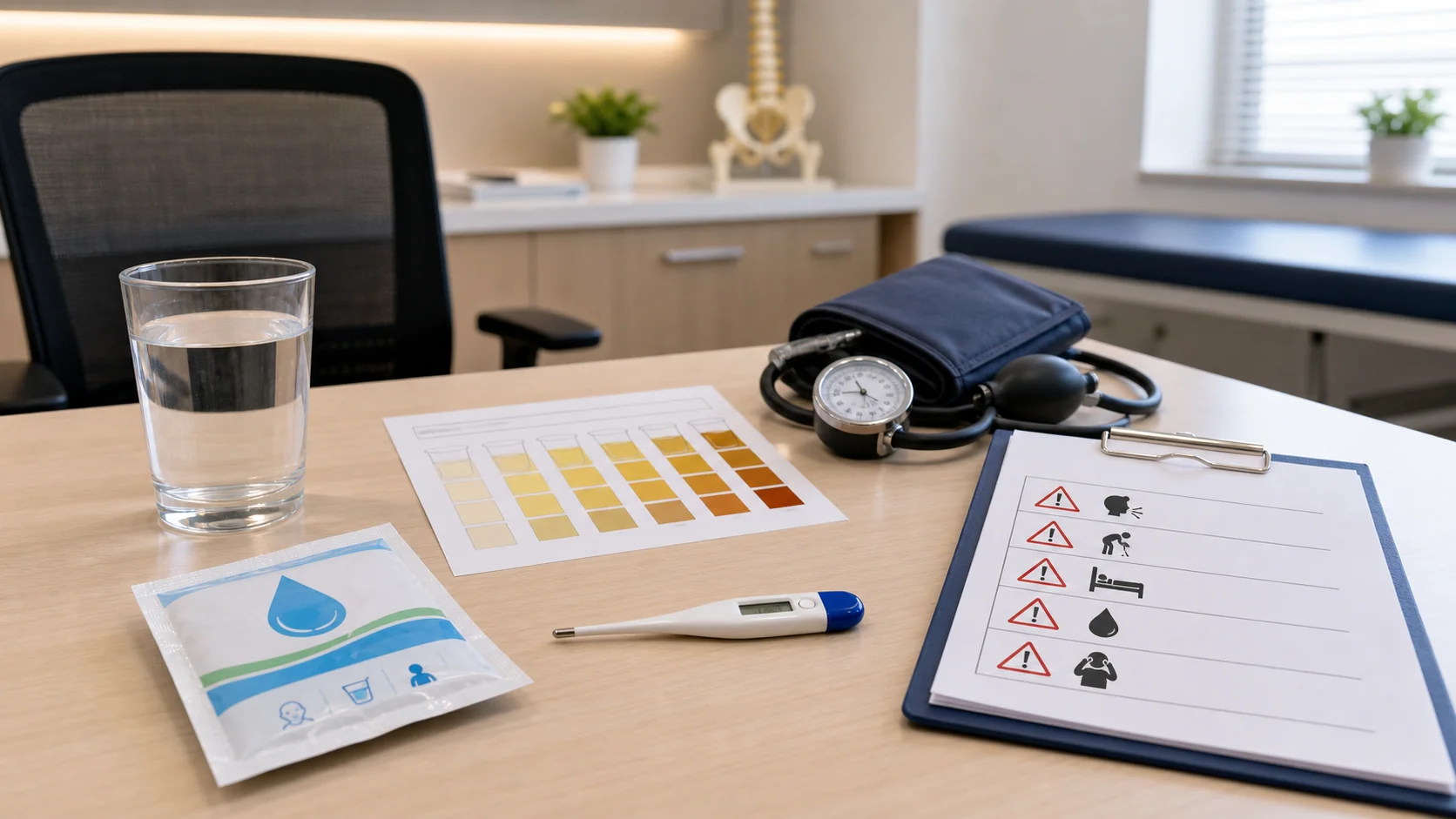
This guide is patient education, not diagnosis or prescription. Dehydration ka cause and severity doctor symptoms, examination, blood pressure, pulse, urine output, fever, vomiting/diarrhea history, medicines, kidney function, sugar status, and reports ke saath decide karte hain. Fluid, ORS, IV fluid, test, admission, or medicine decisions patient-specific assessment ke baad clinician ko karne chahiye.
Dehydration symptoms in adults: sabse common signs kya hote hain?
Adults mein dehydration ke common symptoms dry mouth, zyada pyaas, dark urine, kam urine, dizziness, headache, tiredness, muscle cramps, fast heartbeat, and weakness ho sakte hain. Severe dehydration mein confusion, fainting, very low urine, low blood pressure, or rapidly worsening condition emergency sign ban sakta hai.
Dehydration is a state where the body has less fluid than it needs for normal function. MedlinePlus explains that dehydration can happen when the body loses too much fluid, does not get enough fluids, or both. Mayo Clinic notes that symptoms can include extreme thirst, less frequent urination, dark-colored urine, fatigue, dizziness, and confusion in adults.
Common adult dehydration symptoms include:
- dry mouth, dry lips, or sticky feeling in mouth
- zyada pyaas, but in elderly patients thirst may be less reliable
- dark yellow urine or strong-smelling urine
- urine frequency noticeably kam hona
- dizziness, lightheadedness, headache, or faint feeling
- tiredness, weakness, irritability, or poor concentration
- muscle cramps, especially after heat exposure or sweating
- fast heartbeat, low BP feeling, or standing up par chakkar
- confusion, drowsiness, or unusual behaviour in severe cases
If fever is also present, read viral fever lakshan in Hindi. If urine report is confusing, the urine routine test meaning in Hindi guide explains how urine colour, specific gravity, ketones, protein, sugar, pus cells, and RBC are interpreted with symptoms. If sodium, potassium, chloride, or bicarbonate is marked high/low, use the electrolyte test meaning in Hindi guide before report review. If dizziness or fainting is being described as "BP low ho gaya," read low BP symptoms in Hindi so you can separate mild weakness from warning signs like confusion, very low urine, chest symptoms, bleeding, or repeated vomiting.
Dehydration mild hai ya emergency: fast decision rule kya hai?
Mild dehydration may be monitored with doctor guidance when the patient is alert, able to drink, passing urine, and improving. Urgent care is safer when dehydration appears with repeated vomiting, severe diarrhea, very low urine, fainting, confusion, severe weakness, chest symptoms, high fever, pregnancy, elderly age, or chronic illness.
Use this decision table for urgency, not for self-treatment:
| Situation | What it may suggest | Safer next step |
|---|---|---|
| Thirst, mild dark urine, alert patient, no vomiting | Mild fluid deficit possible | Monitor, improve fluid intake as appropriate, doctor review if not improving |
| Vomiting or loose motions with dizziness | Fluid and electrolyte loss may be significant | Same-day doctor review, especially if intake is poor |
| Very low urine, fainting, confusion, drowsiness | Possible severe dehydration or serious illness | Emergency care now |
| Fever plus dehydration signs | Infection, heat illness, dengue/malaria/typhoid, UTI, or other causes may overlap | Doctor assessment and tests if advised |
| Diabetes, kidney disease, heart disease, pregnancy, elderly patient | Smaller fluid shifts can become riskier | Do not self-manage aggressively; get medical guidance |
The CDC lists heat stroke warning signs such as confusion, loss of consciousness, and very high body temperature as medical emergencies. Heat exhaustion can include heavy sweating, weakness, dizziness, nausea, headache, and fainting. Source: CDC heat stress guidance.
Peshab se dehydration kaise samjhein?
Urine can give useful clues, but it is not a final diagnosis. Dark urine, strong smell, low frequency, or very low urine output may suggest dehydration, but medicines, foods, vitamins, fever, liver/bile problems, blood, urinary infection, kidney disease, and diabetes can also change urine findings.
Practical urine checklist:
- last 6-8 hours mein urine pass hua ya nahi?
- urine dark yellow, orange, brown, reddish, cloudy, or strong-smelling hai?
- burning urine, lower abdomen pain, fever, chills, or back/flank pain hai?
- vomiting/diarrhea, heavy sweating, fasting, or heat exposure hua?
- diabetes, kidney disease, kidney stone, pregnancy, or current medicines hain?
- urine routine report mein specific gravity, ketones, sugar, protein, pus cells, or RBC marked hai?
If urine becomes very low or stops, especially with weakness, vomiting, fever, confusion, swelling, breathlessness, or high creatinine, seek urgent care. For report interpretation, read urine routine test meaning in Hindi and creatinine high meaning in Hindi.
Vomiting, diarrhea, fever, or heat mein dehydration kab risky hota hai?
Dehydration risk rises when fluid loss is continuous or intake is not staying down. Vomiting, diarrhea, fever, heavy sweating, heat exposure, poor appetite, alcohol, uncontrolled sugar, diuretic medicines, kidney disease, and elderly age can make dehydration more serious.
Risk is higher when:
- vomiting repeatedly and fluids are not staying down
- loose motions are frequent, watery, or paired with blood/black stool
- fever is high or persistent with sweating and weakness
- patient is outdoors in heat, sweating heavily, or has heat cramps
- diabetes patient has high sugar, vomiting, deep breathing, or drowsiness
- kidney, heart, liver, BP, or diuretic medicine history is present
- elderly person is confused, sleepy, not eating/drinking, or passing low urine
- pregnancy has vomiting, dizziness, reduced urine, abdominal pain, bleeding, or severe weakness
Mayo Clinic advises medical care for adults with diarrhea when dehydration, severe abdominal or rectal pain, bloody/black stool, fever, or diarrhea lasting more than two days is present. Source: Mayo Clinic diarrhea symptoms and causes.
Dehydration mein kaunsi mistakes avoid karni chahiye?
The biggest mistake is assuming every dehydration-like symptom is solved by drinking a lot of water quickly. Some patients need electrolyte assessment, sugar check, kidney function review, fever workup, IV fluids, or admission. Some heart/kidney patients can be harmed by excess fluids if they self-treat without guidance.
Avoid these mistakes:
- confusion, fainting, very low urine, or severe weakness ko ignore karna
- repeated vomiting ke bawajood ghar par wait karna
- kidney/heart patient mein water overload karna without doctor advice
- leftover antibiotics, painkillers, anti-vomiting medicines, or loose-motion medicines self-start karna
- high fever, dengue/malaria/typhoid-like symptoms ko "sirf dehydration" bolkar delay karna
- urine colour ke basis par kidney/liver diagnosis assume karna
- elderly patient mein "pyaas nahi lag rahi" ko safe sign samajhna
If symptoms started with fever, use when to visit hospital for fever and CBC test meaning in Hindi to prepare for the doctor visit. If symptoms are linked to blood sugar, HbA1c test meaning in Hindi can help you organize diabetes reports, but urgent symptoms should not wait for routine testing.
If vomiting is the main fluid-loss symptom, read vomiting warning signs in Hindi so you can spot blood/coffee-ground vomit, green vomiting, severe abdominal pain, low urine, and other emergency clues before delaying at home.
If the question is specifically about a vomiting tablet such as Ondem, read Ondem tablet uses in Hindi. Anti-vomiting medicine should not be used as a reason to delay care when urine is very low, dizziness/fainting is present, or vomiting continues.
Dehydration mein hospital kab jaana chahiye?
Dehydration needs urgent hospital care when the patient has repeated vomiting, severe diarrhea, very low urine, fainting, confusion, drowsiness, chest pain, breathlessness, severe weakness, high fever, very fast heartbeat, low BP symptoms, pregnancy risk, elderly age, or chronic kidney/heart/diabetes history with worsening symptoms.
Go to emergency care now if any of these are present:
- patient is confused, unusually sleepy, fainting, or difficult to wake
- urine is very low, stopped, or patient is unable to pass urine
- repeated vomiting or inability to keep fluids down
- severe diarrhea, blood in stool, black stool, or severe abdominal pain
- chest pain, breathlessness, blue lips, seizure, or severe headache
- high fever with rash, stiff neck, bleeding, drowsiness, or rapid worsening
- very fast heartbeat, severe dizziness, or low BP-like collapse
- pregnancy, elderly age, diabetes, kidney disease, heart disease, or weak immunity with dehydration signs
Do not drive yourself if you feel faint, confused, or severely weak. Use local emergency help or have someone bring you to the nearest emergency department.
Doctor ko dehydration symptoms kaise batayein?
The fastest useful consultation happens when you bring a clear fluid-loss timeline. Doctor ko yeh samajhna hota hai ki fluid loss kitna hua, intake kitna raha, urine output kaisa hai, and patient clinically stable hai ya nahi.
Before the visit, note:
- symptoms start date and trigger: fever, vomiting, loose motions, heat exposure, fasting, travel, workout, alcohol, medicines
- last urine time, urine colour, and approximate frequency
- vomiting count, loose motion count, fever readings, and highest temperature
- dizziness, fainting, confusion, drowsiness, chest pain, breathlessness, cramps, or severe weakness
- fluids taken and whether they stayed down
- diabetes, BP, kidney, heart, liver disease, pregnancy, elderly age, or immune weakness
- current medicines, especially diuretics, BP medicines, diabetes medicines, painkillers, antibiotics, supplements
- available reports: CBC, creatinine/KFT, electrolytes, sugar, urine routine, dengue/malaria/typhoid tests, LFT
This doctor consultation preparation checklist gives a simple format for carrying symptoms and reports. If medicine names are confusing, use medicine list for doctor visit.
RK Hospital mein dehydration evaluation
R.K. Hospital, Indrapuri, Bhopal offers physician consultation, pathology support, and 24/7 emergency care for dehydration-like symptoms. The useful goal is to decide whether the patient needs observation, oral guidance, IV fluids, electrolyte/sugar/kidney testing, infection workup, admission, or safe follow-up.
At R.K. Hospital, patients can access:
- emergency assessment for low urine, dizziness, fainting, confusion, severe weakness, or rapid worsening
- physician review for vomiting, diarrhea, fever, heat-related symptoms, and chronic illness risk
- pathology support for CBC, electrolytes, kidney function, sugar, urine routine, fever tests, and other tests when advised
- observation, IV fluid support, and admission when clinician assessment finds it necessary
- follow-up guidance based on symptoms, reports, age, medicines, and risk factors
For stable symptoms, call 0755-4260605, visit the contact page, or review hospital services. For severe warning signs, go to the nearest emergency department immediately.
Frequently Asked Questions
Adults mein dehydration ke common symptoms kya hote hain?
Adults mein dehydration ke symptoms dry mouth, zyada pyaas, dark urine, kam urine, dizziness, headache, tiredness, muscle cramps, fast heartbeat, or confusion ho sakte hain. Severe symptoms mein emergency assessment safer hota hai.
Dehydration mein hospital kab jaana chahiye?
Repeated vomiting, severe diarrhea, very low urine, fainting, confusion, drowsiness, chest pain, breathlessness, very fast heartbeat, severe weakness, high fever, elderly age, pregnancy, kidney/heart disease, or rapid worsening ho toh urgent hospital care lein.
Dark urine hamesha dehydration ka sign hota hai?
Dark urine dehydration ka clue ho sakta hai, lekin medicines, foods, liver/bile issues, blood, infection, or kidney problems bhi urine colour change kar sakte hain. Symptoms and urine report ke saath doctor review karein.
Dehydration mein ghar par kya observe karna chahiye?
Urine frequency, urine colour, dizziness, vomiting/loose motions, fever, sweating, alertness, blood pressure history, diabetes/kidney/heart disease, and medicines note karein. Severe symptoms mein home monitoring se delay na karein.
Bottom line
Dehydration symptoms in adults mein sabse useful decision rule yeh hai: pyaas ke saath urine, dizziness, vomiting/diarrhea, fever, heat exposure, alertness, age, and chronic illness risk ko saath mein dekhein. Mild dehydration-like symptoms improving hain toh doctor guidance useful hai; confusion, fainting, very low urine, repeated vomiting, breathlessness, severe weakness, or rapid worsening mein emergency care lein.
R.K. Hospital, Indrapuri, Bhopal mein dehydration-like symptoms, vomiting/diarrhea, fever, urine changes, kidney/sugar reports, physician consultation, and 24/7 emergency support available hai. Call 0755-4260605 for guidance or urgent care.
Part of the fever, dengue and when to seek urgent assessment guide
From this question to a practical consultation
Use this guide to prepare the history for a discussion about fever, dengue and when to seek urgent assessment. Record when the concern began, what has changed and how it affects daily activities. Bring reports and prescriptions already available; you can ask which further tests would help before arranging more investigations.
At the visit, ask what the clinician thinks is most likely and which findings support that view. If the diagnosis remains uncertain, ask how it will be clarified and which changes should prompt earlier assessment. A clear next step is more useful than collecting several possible labels from online searches.
Before leaving, confirm the purpose of each prescribed treatment, the follow-up date and who will communicate results. Keep that plan with your symptom record so a review can compare progress. Tell the clinician if the plan is difficult to follow because of work, costs, side effects or care responsibilities.
- 1
Record day of illness and symptoms
- 2
Assess hydration and warning signs
- 3
Order time-appropriate tests if needed
- 4
Review recovery or escalate promptly
The sequence explains planned care. Urgent symptoms require prompt assessment and may change this pathway.
The assessment before a treatment decision
Testing is chosen according to the suspected cause and timing. A negative or positive test needs interpretation in the context of symptoms and the day of illness. Ask whether repeat assessment is needed if the illness changes.
Medical guidance: WHO: Dengue and severe dengue
How can I prepare for an assessment of these symptoms?
Bring a symptom timeline, relevant reports, current prescriptions and your main questions. Ask how the diagnosis will be assessed, whether further tests are needed, what follow-up is planned and which changes require earlier care.
Continue with symptoms, treatment options, warning signs and related guides
Related Pages on R.K. Hospital
Read Next
- Blood Infection Symptoms: Sepsis Warning SignsEmergency · 10 min read
- Dengue Fever: Symptoms, Warning Signs, and When to Get HospitalizedGeneral Health · 6 min read
- Dengue Ke Khatarnak Warning Signs: Patient Ko Hospital Kab Le JayeinGeneral Health · 2 min read
- Dengue Warning Signs: Symptoms That Mean the Patient Needs AdmissionGeneral Health · 2 min read
- Lungs Infection Symptoms in Hindi: Khansi-Bukhar Kab Pneumonia HaiEmergency · 11 min read
Need a Doctor in Bhopal? Talk to R.K. Hospital
This article is for general information only and does not replace a consultation. Call, WhatsApp, or walk in 24x7 at R.K. Hospital, Indrapuri, near Bima Hospital.
226, C-Sector, Indrapuri, Raisen Road, Bhopal (M.P.) 462022 · Directions & timings · 24x7 Emergency