Doctor Consultation Preparation Checklist: Reports, Questions, and Warning Signs
Simple doctor consultation preparation checklist for patients in Bhopal: what reports to carry, what symptoms to note, what questions to ask, and when to seek emergency care.
Many patients reach the doctor with the right problem but the wrong information: one lab screenshot, no medicine names, no old reports, and no clear timeline. That makes the visit slower and can lead to repeated questions, repeated tests, or missed details.
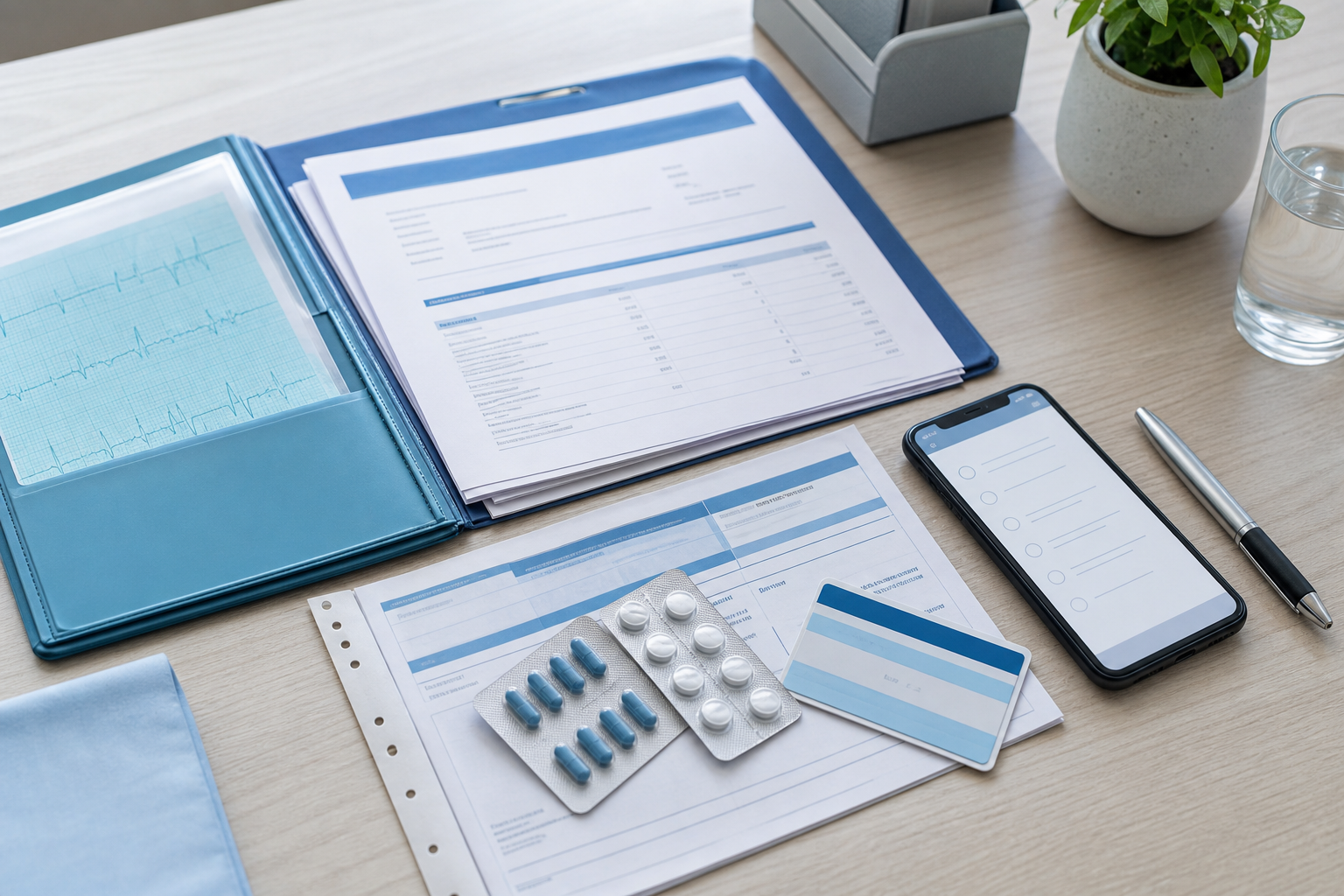
Fast rule: before a doctor consultation, prepare one folder, one medicine list, one symptom timeline, and three questions you want answered. This simple habit helps the doctor understand the case faster and helps the family remember the advice after leaving the room.
Preparation can also go wrong when patients fast without instructions, stop medicines themselves, hide a self-started tablet, or bring only a cropped report. Review what not to do before a doctor appointment before changing your usual routine.
If the visit is a preventive review rather than an appointment for one active problem, use the annual health checkup preparation checklist to confirm the booked tests, fasting instructions, records, and report-review plan.
This guide is patient education, not diagnosis or prescription advice. If the patient has severe chest pain, major breathing difficulty, fainting, confusion, stroke-like symptoms, severe abdominal pain, heavy bleeding, seizure, blue lips, serious injury, or a rapidly worsening condition, seek emergency care instead of waiting for a routine consultation. R.K. Hospital, Indrapuri, Bhopal has 24/7 emergency support; call 0755-4260605 for urgent help.
What is a doctor consultation preparation checklist?
A doctor consultation preparation checklist is a short list of reports, medicines, symptoms, questions, and emergency details to carry before meeting a doctor. It does not replace medical examination. It simply helps the doctor see the full picture faster and helps the patient leave with clearer next steps.
The MedlinePlus guide on talking with your doctor and AHRQ's Questions Are the Answer both emphasize preparing questions and sharing clear information during medical visits. In real hospital visits, this matters because consultation time can be lost searching for old reports or trying to remember tablet names.
Use this article for routine and planned visits. For emergency-room arrival, read what happens in a hospital emergency room.
If the appointment will happen by phone or video, use the online doctor consultation checklist to test your device, arrange reports, protect privacy, and prepare a backup contact method.
If several symptoms or long-term conditions are competing for attention, use the doctor visit checklist for multiple health problems to rank concerns and agree on what needs assessment today versus a planned follow-up.
What should you carry for a doctor consultation?
Carry the documents that explain the patient's current problem, old medical history, current medicines, allergies, and payment or identification needs. A single new report is often less useful than a complete folder showing what happened before and what changed now.
Bring these items in one folder or phone album:
- latest prescription or referral note
- old prescriptions for the same problem
- recent blood tests, urine tests, ECG, X-ray, ultrasound, CT, MRI, echo, or other reports
- discharge summaries from previous admissions or surgeries
- current medicine strips or a written medicine list
- allergy history, especially medicine allergy or previous anaesthesia reaction
- diabetes, BP, thyroid, heart, kidney, liver, pregnancy, or asthma records if relevant
- vaccination or child health record for pediatric visits
- ID proof, insurance card, Ayushman or TPA papers if needed
- phone number of one family member who knows the patient's history
For patients coming because BP readings are repeatedly high, carry the actual readings with date and time. This guide on high BP symptoms and when to seek emergency care explains which warning signs should not wait for a routine appointment.
If your main problem is simply organizing what to bring to OPD, use this focused OPD visit documents checklist for reports, medicine strips, ID proof, insurance papers, and symptom notes.
If medicine names are the confusing part, make a separate medicine list for doctor visit before the consultation. It helps you note regular medicines, self-started tablets, supplements, allergy history, and recently stopped medicines without guessing from memory. If fever, pain, BP, sugar, vomiting, or weakness changed over time, add a short symptom diary before doctor visit so the timeline is clear.
When there has been a suspected reaction, prepare a focused medicine allergy list with the drug name, exact symptoms, timing, date, and any emergency or hospital care required.
If you are taking an elderly parent for consultation, use this focused elderly parent doctor visit checklist so medicines, fall details, caregiver history, and emergency warning signs are not missed.
If any adult family member is accompanying the patient, this caregiver checklist for a doctor visit explains when to speak, how to respect privacy, and what to confirm before leaving.
If the hard part is speaking clearly once you are inside the room, use this 60-second guide on how to explain symptoms to a doctor before your turn.
If the prescription form itself is confusing, such as tablet vs capsule, scored tablet, capsule shell, or "do not crush" wording, keep this tablet and capsule difference explainer with your medicine list and ask before switching forms.
If the visit is specifically for another view on previous advice, scan reports, or a planned procedure, use this second opinion doctor visit checklist so you carry the first prescription, full report set, and decision questions.
For planned surgery visits, use the separate surgery preparation checklist, because fasting, anaesthesia, medicine timing, and admission instructions need procedure-specific confirmation.
How should you explain symptoms clearly?
Explain symptoms as a timeline: when they started, where they are, how severe they are, what changed, and what you already tried. This is better than only saying "pain hai" or "fever hai" because doctors need pattern, duration, triggers, and warning signs.
Use this quick format:
| What to tell the doctor | Example detail |
|---|---|
| Start time | "Fever started Sunday night" or "pain began after dinner" |
| Location | right lower abdomen, chest center, throat, urine burning, one knee |
| Severity | mild, moderate, severe, worsening, coming and going |
| Associated symptoms | vomiting, loose motion, cough, breathlessness, bleeding, weakness |
| Medicines already taken | tablet name, dose if known, number of days, any antibiotic or steroid |
| Existing conditions | diabetes, BP, pregnancy, kidney disease, heart disease, asthma |
| Red flags | fainting, confusion, blue lips, severe pain, low urine, seizure |
For fever, bring a temperature chart if possible: date, highest temperature, chills, vomiting, rash, cough, urine symptoms, and medicines taken. If fever is the main problem, the hospital fever warning signs guide can help you decide urgency before travel.
Which questions should you ask during the visit?
Ask questions that change what you do after leaving the hospital. Good questions cover the likely next step, tests, warning signs, medicine instructions, follow-up timing, and what to do if symptoms worsen.
Before entering the room, write your top three questions. The AHRQ patient engagement guidance recommends preparing questions before, during, and after the appointment so important concerns are not missed.
If you want a focused question list for the consultation room, keep this separate guide open: questions to ask doctor during appointment.
Practical questions to ask:
- What is the main concern you are checking for today?
- Which tests are needed, and what will they help decide?
- Are there warning signs that mean we should come back urgently?
- How should prescribed medicines be taken, and for how many days?
- Should any current medicine be continued, paused, or reviewed?
- What food, activity, school, work, travel, or rest advice should we follow?
- When should we follow up, and should we bring repeat reports?
- Who should we call if symptoms worsen before the follow-up?
Do not feel embarrassed to ask for instructions to be repeated. If one family member manages medicines at home, they should hear the instructions clearly too.
What should you tell the doctor about medicines?
Tell the doctor every medicine the patient is taking, including painkillers, antibiotics, steroids, supplements, ayurvedic medicines, homeopathy, and over-the-counter tablets. Do not hide medicines because they were self-started; the doctor needs to know them to avoid interactions and unsafe duplication.
Important medicine details include:
- name of each current tablet, syrup, inhaler, injection, or insulin
- how many days it has been taken
- any missed doses or accidental extra doses
- blood thinners, diabetes medicines, BP medicines, seizure medicines, steroids, thyroid medicines, and psychiatric medicines
- painkillers such as ibuprofen, diclofenac, naproxen, aspirin, or combinations
- antibiotics already taken before tests
- supplements, gym products, herbal medicines, and alcohol or tobacco use
- known allergies or side effects from earlier medicines
This section is not telling you to start, stop, or change any medicine. It is telling you what information to share so your doctor can decide safely.
How should you prepare for test reports and follow-up?
For report review, bring the full report set and the symptom context, not just the abnormal value. A high or low number may mean different things depending on age, symptoms, trend, medicines, pregnancy, chronic disease, and lab units.
Use this report-review checklist:
- keep reports in date order
- mark the report that worries you, but keep older related reports attached
- check units and lab reference ranges before comparing values
- write symptoms that were present on the day of the test
- tell the doctor if antibiotics, steroids, painkillers, or IV fluids were taken before testing
- bring previous discharge summaries or surgery notes if the test is related to an old illness
- ask when repeat testing is needed, if at all
For example, CRP, CBC, platelet count, creatinine, electrolytes, urine routine, TSH, SGPT/SGOT, and sugar reports all need symptom context. If CRP is the confusing report, read CRP test meaning in Hindi. If urine findings are confusing, read urine routine test meaning in Hindi. If sodium/potassium values are marked, read electrolyte test meaning in Hindi. If the question is kidney-related, read creatinine high meaning in Hindi.
Once the consultation is complete, use the after-doctor-visit follow-up checklist to organise the prescription, advised tests, symptom changes, warning signs, and next review.
When is a routine consultation not enough?
A routine consultation is not enough when the patient has emergency warning signs or is rapidly worsening. In those situations, the goal is not a perfect appointment file; the goal is reaching emergency care quickly and safely.
Go to emergency care now for:
- severe chest pain, pressure, sweating, fainting, or pain spreading to arm/jaw/back
- severe breathlessness, blue lips, noisy breathing, or inability to speak full sentences
- sudden face drooping, one-sided weakness, speech difficulty, sudden severe imbalance, or vision change
- confusion, seizure, unusual drowsiness, or loss of consciousness
- severe abdominal pain, rigid abdomen, repeated vomiting, or blood in vomit/stool
- heavy bleeding, serious injury, burns, poisoning, or suspected fracture with deformity
- fever with stiff neck, seizure, severe weakness, very low urine, or rapidly worsening condition
- child, elderly patient, pregnant patient, diabetic patient, or heart/kidney patient becoming suddenly worse
The CDC describes sepsis as a medical emergency linked to the body's extreme response to infection. A family should not try to diagnose sepsis at home, but fever with confusion, severe weakness, breathlessness, very low urine, or rapid worsening needs urgent medical assessment.
For chest symptoms, read the chest pain and breathlessness emergency guide. For breathing difficulty, read when difficulty breathing needs hospital care. For stroke-like symptoms, use the FAST stroke symptoms guide.
What is the easiest way to prepare in 10 minutes?
If you have only 10 minutes, do four things: put reports in one folder, photograph current medicine strips, write a symptom timeline, and write three questions. This covers most of the information doctors repeatedly need.
Quick 10-minute checklist:
- Put all reports and prescriptions in date order.
- Take clear photos of medicine strips or bottles.
- Write: symptom start date, main symptom, fever/pain severity, vomiting/bleeding/breathing issues.
- Note allergies, pregnancy status, diabetes/BP/heart/kidney disease, and previous surgery.
- Write your top three questions.
- Carry ID proof and payment or insurance documents.
- Save the hospital phone number.
- Bring one attendant who can remember instructions.
For stomach pain, choosing the right department can be confusing. This guide on which doctor to see for stomach pain in Bhopal explains when General Medicine, Surgery, Gynecology, Radiology, or emergency assessment may be needed.
Where can you consult at R.K. Hospital, Bhopal?
R.K. Hospital, Indrapuri, Bhopal provides General Medicine, General & Laparoscopic Surgery, Gynecology, Radiology, Pathology, and 24/7 emergency support under one roof. For routine visits, bring your reports and questions. For emergency signs, come to the emergency department without delay.
Use the services page to understand available departments, review doctors at R.K. Hospital, or use the contact page for appointment and location details.
For urgent help, call 0755-4260605. If symptoms are severe or rapidly worsening, seek emergency care first instead of waiting to organize every document perfectly.
If you are meeting a clinician who does not already know your history, use the first doctor visit checklist to create a one-page summary and choose the most relevant previous records.
Frequently Asked Questions
What should I carry for a doctor consultation?
Carry your old prescriptions, current medicine list, allergies, recent test reports, discharge summaries, ID proof, insurance papers if needed, and a short symptom timeline. If the visit is for fever, pain, pregnancy, surgery, or a chronic condition, bring related old reports too.
How do I explain symptoms clearly to a doctor?
Tell the doctor when the symptom started, where it is, how severe it is, what makes it better or worse, what medicines you already took, and whether there are warning signs like breathlessness, chest pain, fainting, bleeding, confusion, or severe weakness.
What questions should I ask during a doctor visit?
Ask what the likely next step is, which tests are needed and why, what warning signs need urgent care, how to take prescribed medicines, when to follow up, and what to do if symptoms worsen before the follow-up date.
When should I skip a routine appointment and go to emergency?
Go to emergency care for severe chest pain, major breathing difficulty, stroke-like symptoms, fainting, confusion, severe abdominal pain, heavy bleeding, blue lips, seizure, serious injury, or rapidly worsening condition. Do not wait for a routine appointment in these situations. If the doctor has ordered an ultrasound, follow this ultrasound fasting and full-bladder preparation guide and confirm the instructions for the exact scan with the imaging department.
Need Medical Advice?
This article is for informational purposes only. For personalized medical advice, please consult a doctor at R.K. Hospital & Research Centre.
Book Appointment: 0755-4260605