How to Explain Symptoms to a Doctor: 60-Second Guide for Patients
How to explain symptoms to a doctor clearly: what to say first, how to describe pain, fever, medicines, reports, and when to seek emergency care in Bhopal.
Many patients know something is wrong but struggle to explain it clearly inside the consultation room. They say "pain hai", "weakness hai", or "bukhar tha", then forget the start date, medicine name, fever reading, or warning sign that actually matters.
Fast rule: explain symptoms in this order: main problem, start time, location, severity, pattern, medicines already taken, existing diseases, and warning signs. A clear 60-second summary helps the doctor understand the case faster. It does not replace examination, testing, or personalized medical advice.
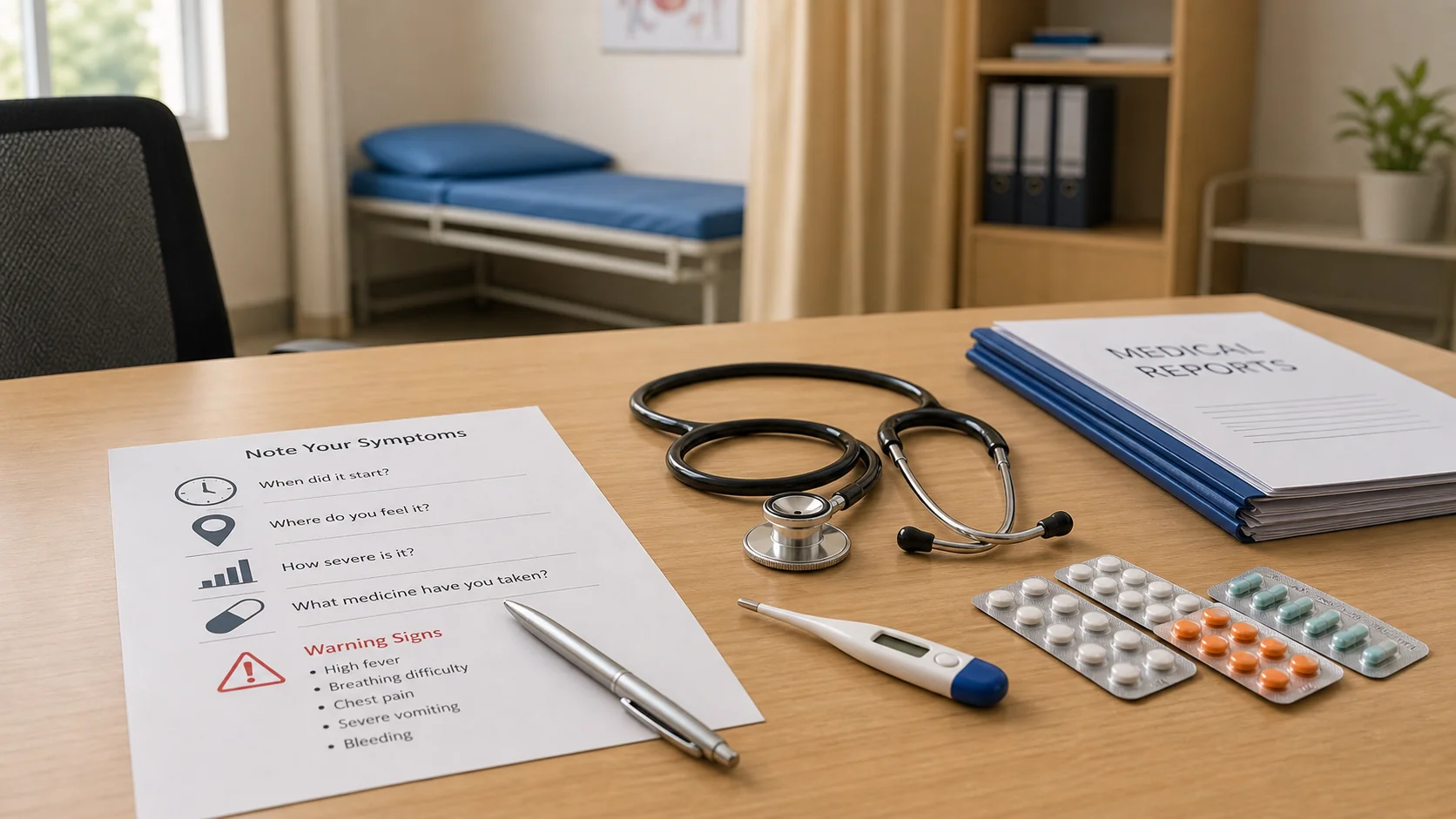
This article is patient education, not diagnosis or prescription advice. Do not start, stop, repeat, or change medicines based only on this page. If the patient has severe chest pain, major breathing difficulty, fainting, confusion, stroke-like symptoms, seizure, severe abdominal pain, heavy bleeding, blue lips, serious injury, poisoning, severe allergy, or a rapidly worsening condition, seek emergency care instead of waiting for a routine appointment. R.K. Hospital, Indrapuri, Bhopal has 24/7 emergency support; call 0755-4260605 for urgent help.
What is the best way to explain symptoms to a doctor?
The best way to explain symptoms to a doctor is to give a short timeline: what started, when it started, where it is, how severe it is, what changed, what you already took, and what warning signs are present. This keeps the visit focused without trying to diagnose yourself.
A symptom explanation is a patient story, not a final medical answer. The doctor still needs examination, vital signs, medical history, and sometimes tests. The MedlinePlus guide on talking with your doctor recommends preparing details and questions before the visit. The Agency for Healthcare Research and Quality also encourages patients to bring medicines, ask questions, and make sure instructions are understood.
If you need a full visit-prep flow, use the doctor consultation preparation checklist. If your main issue is writing daily notes, use the symptom diary before doctor visit. This page focuses on what to say in the room.
If the doctor will need old diseases, allergies, surgeries, admissions, or family history along with the symptom story, prepare a short medical history for doctor visit checklist too.
If hearing, speech, language, memory, or anxiety makes the conversation itself difficult, use this doctor visit communication checklist to plan a written summary, companion support, and a teach-back recap.
What should you say in the first 60 seconds?
Start with the reason you came today, then give the timeline and severity. Do not begin with every old report unless the old report explains the current problem. The first minute should help the doctor understand urgency, direction, and what needs attention first.
Use this 60-second format:
| Step | What to say | Example |
|---|---|---|
| Main problem | One clear concern | "Fever and weakness" or "right lower stomach pain" |
| Start time | Date and time if possible | "Started Monday night" or "since yesterday after dinner" |
| Location | Exact area | chest center, right abdomen, lower back, throat, urine burning |
| Severity | Mild, moderate, severe, worsening | "Pain is 8/10 and increasing" |
| Pattern | Constant or coming and going | after food, on walking, at night, with cough, during urination |
| Medicines taken | Name/photo and timing | "Took paracetamol twice" or "old antibiotic for one day" |
| Warning signs | Serious changes | breathlessness, fainting, confusion, bleeding, seizure, very low urine |
Here is a better version of a common sentence:
Instead of: "Doctor, pet dard ho raha hai."
Say: "Right side lower abdomen pain started last night after dinner. It is worsening, I vomited twice, and walking makes it worse. I took one painkiller at home but it did not help."
For stomach-pain triage and department choice, read which doctor to see for stomach pain in Bhopal.
How should you describe pain clearly?
Describe pain by location, start time, severity, pattern, triggers, spreading, and associated symptoms. Pain words like gas, acidity, cramp, stabbing, burning, or pressure can help, but they are not a diagnosis. The safest approach is to describe what you feel and what changed.
For a ready seven-point framework, functional 0-to-10 scale, and copyable consultation script, use the detailed guide on how to describe pain to a doctor.
Use this pain checklist:
- exact location: chest, upper abdomen, right lower abdomen, back, head, joint, pelvic area
- start: sudden, gradual, after food, after injury, after lifting weight, during periods
- severity: mild, moderate, severe, disturbing sleep, unable to walk, unable to eat
- pattern: constant, coming in waves, burning, pressure-like, sharp, crampy
- trigger: movement, cough, urination, deep breath, exertion, position, meals
- spreading: arm, jaw, back, shoulder, groin, leg
- associated symptoms: fever, vomiting, loose motion, bleeding, breathlessness, fainting, urine symptoms
- medicines tried: painkiller name, dose timing if known, whether it helped
Do not keep repeating painkillers without medical review, especially with stomach pain, chest symptoms, pregnancy, kidney disease, blood thinners, vomiting, bleeding, or severe weakness. For severe abdominal pain, use this hospital warning-sign guide. For chest pain with breathlessness, seek urgent help and read the chest pain and breathlessness emergency guide.
How should you explain fever, vomiting, loose motion, or weakness?
For fever or infection-like symptoms, tell the doctor the number of days, highest temperature, associated symptoms, fluid intake, urine frequency, medicines already taken, and whether the patient is becoming weaker. Fever seriousness depends on the whole patient, not only the thermometer number.
For fever, mention:
- first day of fever
- highest temperature and how it was measured if known
- chills, rash, cough, sore throat, body ache, headache, vomiting, loose motion, urine burning, or abdominal pain
- fever medicine name and timing if taken
- dengue, malaria, typhoid, CBC, CRP, urine, or other reports if already done
- fluid intake and urine frequency
- weakness, drowsiness, confusion, breathlessness, bleeding, seizure, stiff neck, or rapid worsening
For vomiting or loose motion, mention the number of episodes, blood or mucus if seen, ability to keep fluids down, urine amount, fever, abdominal pain, and medicines already taken. For dehydration warning signs, read dehydration symptoms in adults in Hindi.
If vomiting is repeated, blood-stained, coffee-ground-like, green, or paired with severe pain or low urine, use this focused vomiting warning signs in Hindi checklist and seek emergency care when red flags are present.
The CDC describes sepsis as a medical emergency linked to the body's extreme response to infection. Families should not try to diagnose sepsis at home, but fever with confusion, severe weakness, breathlessness, very low urine, or rapid worsening needs urgent medical assessment.
What medicines and reports should you mention?
Tell the doctor every medicine already taken and show the full report set, not only one abnormal value. Medicines can change symptoms, test results, and safety decisions. Reports need context: why the test was done, what symptoms were present, and whether values are new or old.
Mention all of these if applicable:
- current prescription medicines
- self-started painkillers, fever medicines, antibiotics, antacids, cough syrups, steroids, sleeping pills, or allergy tablets
- diabetes, BP, thyroid, heart, kidney, seizure, asthma, blood thinner, or pregnancy medicines
- supplements, gym products, ayurvedic, homeopathy, or herbal medicines
- medicine allergy or previous reaction
- missed doses, accidental extra doses, or stopped medicines
- latest reports and old reports for comparison
- discharge summaries, surgery notes, scan reports, ECG, ultrasound, X-ray, CT, MRI, or pathology reports
This is not advice to start, stop, or change medicines. It is a safer way to share information so your doctor can decide. If medicine names are confusing, prepare a medicine list for doctor visit before leaving home. If papers are scattered, use the OPD visit documents checklist.
What if you are embarrassed, confused, or unsure?
Say what you know clearly and say what you do not know. It is better to say "I do not remember the tablet name, but I have a photo" than to guess. It is better to say "bleeding happened once" than to hide it because the topic feels uncomfortable.
Patients and families should mention:
- pregnancy possibility, missed period, or breastfeeding when relevant
- blood in stool, urine, vomit, cough, or vaginal bleeding
- alcohol, tobacco, or substance use when medically relevant
- previous surgery, admission, or serious illness
- medicine allergy or anaesthesia reaction
- falls, injury, poisoning, overdose, or self-harm concern
- symptoms that are getting worse despite home treatment
If the patient is a child, elderly, confused, very weak, pregnant, or taking many medicines, bring one family member who knows the history. For child-related warning signs, read when to take a child to hospital.
When should you go to emergency instead of preparing a perfect explanation?
Do not delay emergency care to organize notes when the patient has serious warning signs or is rapidly worsening. Carry whatever information is ready, but reaching emergency care matters more than making the perfect timeline.
Go to emergency care now for:
- severe chest pain, pressure, sweating, fainting, or pain spreading to arm, jaw, or back
- severe breathlessness, blue lips, noisy breathing, or inability to speak full sentences
- sudden face drooping, one-sided weakness, speech difficulty, severe imbalance, or sudden vision change
- confusion, seizure, unusual drowsiness, or loss of consciousness
- severe abdominal pain, rigid abdomen, repeated vomiting, or blood in vomit or stool
- heavy bleeding, serious injury, burns, poisoning, suspected overdose, or fracture with deformity
- fever with stiff neck, confusion, seizure, severe weakness, very low urine, or rapid worsening
- child, elderly patient, pregnant patient, diabetic patient, or heart/kidney patient becoming suddenly worse
For emergency flow, read what happens in a hospital emergency room. For stroke-like symptoms, use the FAST stroke symptoms guide. For breathing difficulty, read when difficulty breathing needs hospital care.
What is the easiest script to use before OPD?
If you are nervous, write a 5-line script before entering the consultation room. This reduces forgetting and helps the family explain the same story consistently.
Copy this:
- Main problem: ________
- Started on: ________
- Location and severity: ________
- Fever/BP/sugar/oxygen/vomiting/bleeding/breathing issue if any: ________
- Medicines already taken and existing diseases: ________
Then add three questions:
- What should we watch for at home?
- Which tests or reports matter now?
- When should we follow up or come urgently?
For a fuller question list, use questions to ask doctor during appointment.
If anxiety makes your mind go blank, prepare the four-part note in this doctor appointment anxiety checklist and read from it during the consultation.
Where can you consult at R.K. Hospital, Bhopal?
R.K. Hospital, Indrapuri, Bhopal provides General Medicine, General and Laparoscopic Surgery, Gynecology, Radiology, Pathology, and 24/7 emergency support under one roof. For a routine visit, bring your symptom summary, reports, medicine list, allergies, and questions. For emergency signs, come to emergency without delay.
Use the services page to understand available departments, review doctors at R.K. Hospital, or visit the contact page for appointment and location details.
For urgent help, call 0755-4260605. If symptoms are severe or rapidly worsening, seek emergency care first instead of spending time perfecting your notes.
Frequently Asked Questions
How do I explain symptoms to a doctor quickly?
Start with the main problem, when it began, where it is, how severe it is, what changed, what medicines you already took, and whether there are warning signs such as chest pain, breathlessness, fainting, confusion, heavy bleeding, seizure, severe pain, or rapid worsening.
What should I say first in a doctor consultation?
Say the one symptom or concern that made you come today, then give the timeline. For example: fever for three days, right-sided abdominal pain since last night, burning urine for two days, or breathlessness that worsened today.
Should I tell the doctor about medicines I took myself?
Yes. Tell the doctor about all medicines already taken, including painkillers, antibiotics, steroids, supplements, herbal medicines, and old prescriptions. Do not hide self-started medicines because they can affect test results, interactions, and medical decisions.
When should I go to emergency instead of preparing my explanation?
Go to emergency care for severe chest pain, major breathing difficulty, stroke-like symptoms, fainting, confusion, seizure, severe abdominal pain, heavy bleeding, blue lips, serious injury, poisoning, or a rapidly worsening condition.
Read Next
- How to Describe Pain to a Doctor: 7-Point ChecklistGeneral Health · 10 min read
- How to Find a General Physician in Bhopal: A 7-Point ChecklistGeneral Health · 9 min read
- How Long Does Gallbladder Surgery Take? Surgeon Answers Every QuestionSurgery · 4 min read
- Medicine List for Doctor Visit: Doctor Ko Kaunsi Dawa Batani Chahiye?General Health · 12 min read
- Symptom Diary Before Doctor Visit: Kya Likhein Aur Kaise Batayein?General Health · 10 min read
Need a Doctor in Bhopal? Talk to R.K. Hospital
This article is for general information only and does not replace a consultation. Call, WhatsApp, or walk in 24x7 at R.K. Hospital, Indrapuri, near Bima Hospital.
226, C-Sector, Indrapuri, Raisen Road, Bhopal (M.P.) 462022 · Directions & timings · 24x7 Emergency