Symptom Diary Before Doctor Visit: Kya Likhein Aur Kaise Batayein?
Symptom diary before doctor visit guide for patients in Bhopal: fever, pain, BP, sugar, vomiting, medicines, warning signs, and what to tell your doctor clearly.
Many consultations become harder than they need to be because the patient says "bukhar tha", "pain ho raha tha", or "sugar high thi" but cannot remember when it started, how high it went, which medicine was taken, or what changed after that. A small symptom diary can make the doctor visit much clearer.
Fast rule: before a doctor visit, write a one-page timeline: start date, main symptom, severity, readings, medicines taken, existing diseases, and warning signs. Do not try to diagnose yourself. The diary is only to help your doctor understand the story faster and more accurately.
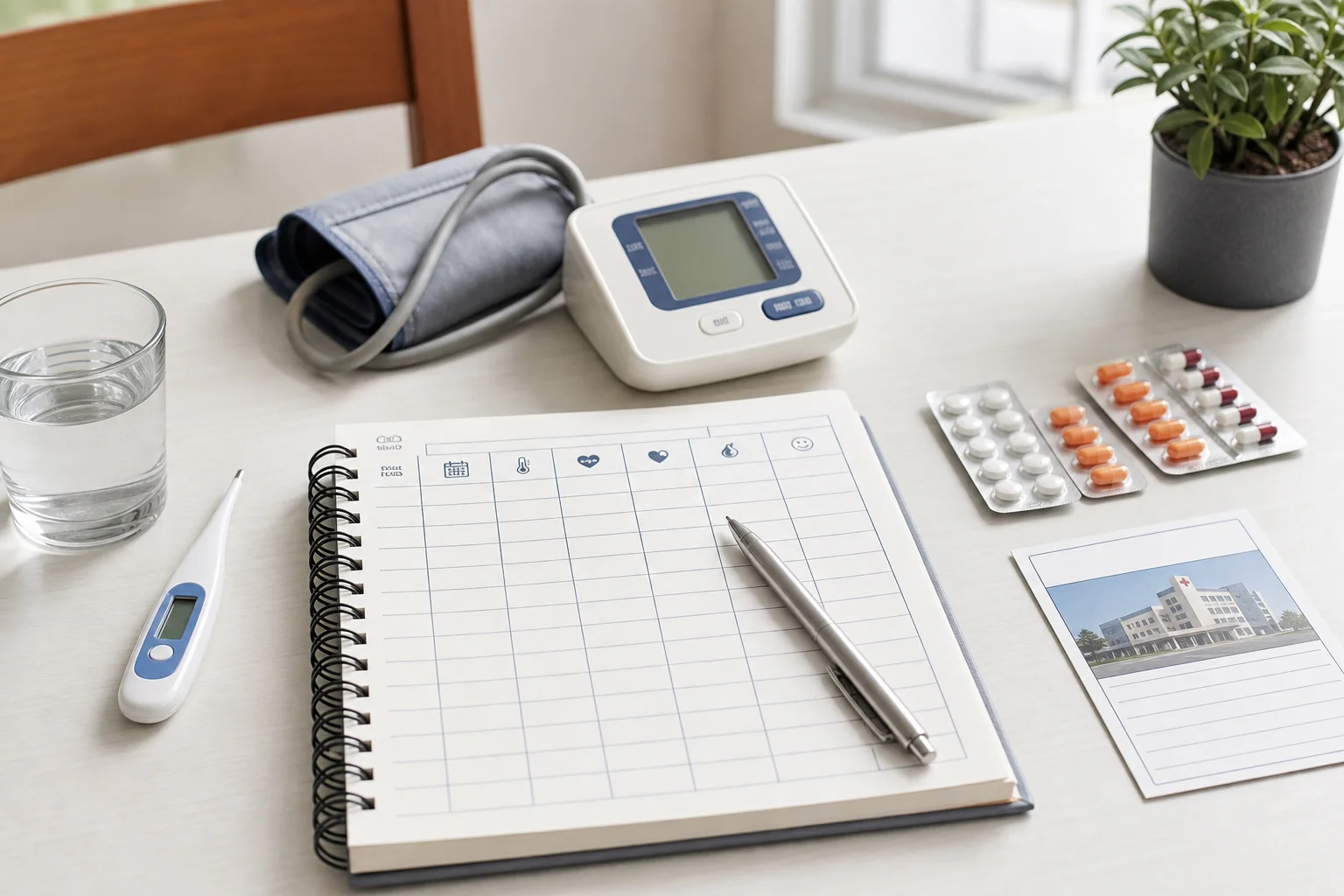
This article is patient education, not diagnosis or prescription advice. Do not start, stop, repeat, or change medicines based only on this page. If the patient has severe chest pain, major breathing difficulty, fainting, confusion, stroke-like symptoms, seizure, severe abdominal pain, heavy bleeding, blue lips, serious injury, poisoning, severe allergy, or a rapidly worsening condition, seek emergency care instead of waiting for a routine appointment. R.K. Hospital, Indrapuri, Bhopal has 24/7 emergency support; call 0755-4260605 for urgent help.
What is a symptom diary before a doctor visit?
A symptom diary before a doctor visit is a short written timeline of what the patient felt, when it started, how it changed, what readings were measured, and what medicines were already taken. It is not a self-diagnosis tool. It helps the doctor connect symptoms, reports, medicines, and examination findings.
The MedlinePlus guide on talking with your doctor recommends preparing details and questions before medical visits. The Agency for Healthcare Research and Quality also encourages patients to bring medicines, ask questions, and make sure instructions are understood.
If you need the full visit-prep flow, use the doctor consultation preparation checklist. If your main concern is papers and reports, use the OPD visit documents checklist. This page focuses only on symptom notes.
What should you write first in a symptom diary?
Start with the details that change medical decision-making: start time, main symptom, severity, readings, medicines already taken, and whether the patient is improving or worsening. A clear timeline is more useful than a long paragraph.
Use this simple format:
| What to write | Example |
|---|---|
| Start date and time | "Fever started Tuesday evening" or "pain began after lunch" |
| Main symptom | fever, pain, cough, vomiting, loose motion, urine burning, weakness, bleeding |
| Location | right lower abdomen, chest center, throat, lower back, one knee |
| Severity | mild, moderate, severe, worsening, coming and going, disturbing sleep |
| Pattern | constant, after food, with walking, at night, after medicine, after exertion |
| Readings | temperature, BP, sugar, pulse, oxygen level, urine output if measured |
| Medicines already taken | name/photo, timing, number of doses, self-started or prescribed |
| Existing conditions | diabetes, BP, pregnancy, asthma, heart, kidney, liver, seizure, previous surgery |
| Warning signs | fainting, confusion, breathlessness, blue lips, severe pain, bleeding, seizure |
For medicine details, carry strips or clear photos. This medicine list for doctor visit gives a safer format for regular tablets, self-started medicines, supplements, and allergies.
How do you track fever before seeing a doctor?
For fever, write the highest temperature, time of fever spikes, chills, rash, cough, urine symptoms, vomiting, loose motion, medicines taken, and whether the patient is getting weaker. Do not judge fever seriousness from temperature alone; age, symptoms, hydration, and worsening pattern matter.
Fever diary format:
- date and time of each temperature reading
- thermometer reading and where it was measured if known
- chills, sweating, body ache, headache, rash, cough, sore throat, vomiting, loose motion, urine burning, or abdominal pain
- medicine taken for fever, with name and timing if known
- fluids taken and urine frequency
- dengue, malaria, typhoid, CBC, CRP, or other reports if already done
- worsening signs such as confusion, severe weakness, breathlessness, stiff neck, seizure, very low urine, or repeated vomiting
The CDC describes sepsis as a medical emergency linked to the body's extreme response to infection. A family should not try to diagnose sepsis at home, but fever with confusion, severe weakness, breathlessness, very low urine, or rapid worsening needs urgent medical assessment.
For fever-specific warning signs, read viral fever lakshan in Hindi, when to visit hospital for fever, and this focused guide on blood infection symptoms and sepsis warning signs.
How do you track pain clearly for a doctor?
For pain, write the exact location, start time, severity, what makes it better or worse, associated symptoms, and whether pain is spreading. Pain notes help the doctor decide which examination, test, or specialist review may be needed.
Use this pain checklist:
| Pain detail | What to note |
|---|---|
| Location | chest, upper abdomen, right lower abdomen, back, head, joint, pelvic area |
| Start | sudden, gradual, after food, after injury, after lifting weight, during periods |
| Severity | 1-10 score if useful, sleep disturbed, unable to walk/sit/eat |
| Pattern | constant, crampy, burning, sharp, pressure-like, coming in waves |
| Triggers | food, movement, cough, urination, deep breath, exertion, position |
| Other symptoms | fever, vomiting, bleeding, breathlessness, fainting, urine symptoms |
| Medicines tried | painkiller name, dose timing if known, whether it helped |
Do not keep repeating painkillers without medical review, especially with stomach pain, pregnancy, kidney disease, blood thinners, vomiting, bleeding, or severe weakness. For severe abdominal pain, use this hospital warning-sign guide. For chest pain with breathlessness, do not wait; read the chest pain and breathlessness emergency guide.
If pain has persisted or repeatedly returned, use the focused chronic pain doctor visit checklist to add activity limits, sleep disruption, medicine history, and a seven-day functional diary before the consultation.
How should BP, sugar, and oxygen readings be written?
Home readings are useful only when they include date, time, symptoms, device context, and medicines taken. A single BP, sugar, or oxygen number should not be used to self-change treatment. Your doctor will interpret readings with symptoms, examination, medicines, and reports.
Write readings like this:
| Reading | Write it this way |
|---|---|
| BP | date/time, reading, pulse, before/after medicine, symptoms such as headache, chest pain, dizziness |
| Sugar | fasting/PP/random, date/time, meal timing, medicine/insulin timing, symptoms such as sweating or confusion |
| Temperature | date/time, reading, fever medicine timing, chills/rash/cough/vomiting |
| Oxygen level | date/time, reading, breathlessness, cough, chest pain, device used if known |
| Vomiting/loose motion | number of episodes, blood/mucus if any, urine frequency, fluid intake |
If you have diabetes, carry recent sugar readings and HbA1c if available; this HbA1c test meaning guide explains how A1C differs from one-day sugar readings. For high BP warning signs, read high BP symptoms in Hindi.
If blood pressure is the main reason for the appointment, use this focused home blood pressure log guide to record cuff technique, pulse, medicine timing, symptoms, and every scheduled reading consistently.
What is the fastest 5-minute symptom diary template?
If you have only 5 minutes before leaving for the hospital, write the problem, timeline, readings, medicines, allergies, and danger signs on one page. This is enough to make the consultation more organized.
Copy this template:
- Main problem: ________
- Started on: date/time ________
- Getting better, same, or worse: ________
- Location and severity: ________
- Fever/BP/sugar/oxygen readings if checked: ________
- Vomiting, loose motion, bleeding, urine problem, cough, breathlessness, rash, dizziness, or weakness: ________
- Medicines already taken: name/photo + timing ________
- Existing disease: diabetes/BP/heart/kidney/asthma/pregnancy/previous surgery ________
- Allergy or previous medicine reaction: ________
- Top three questions for doctor: ________
Bring one family member who knows the history if the patient is a child, elderly, confused, very weak, pregnant, or taking multiple medicines. Before entering the room, also prepare your top questions using questions to ask doctor during appointment.
If you have written the diary but feel unsure how to say it quickly, use this 60-second symptom explanation format before entering the consultation room.
If headache is the main symptom, use the focused headache doctor visit checklist to record episode timing, associated symptoms, medicine use, and emergency warning signs.
When should you go to emergency instead of preparing a diary?
Do not delay emergency care to complete a symptom diary when the patient has serious warning signs or is rapidly worsening. In these situations, carry whatever information is ready, but reaching emergency care matters more than perfect notes.
Go to emergency care now for:
- severe chest pain, pressure, sweating, fainting, or pain spreading to arm, jaw, or back
- severe breathlessness, blue lips, noisy breathing, or inability to speak full sentences
- sudden face drooping, one-sided weakness, speech difficulty, severe imbalance, or sudden vision change
- confusion, seizure, unusual drowsiness, or loss of consciousness
- severe abdominal pain, rigid abdomen, repeated vomiting, or blood in vomit or stool
- heavy bleeding, serious injury, burns, poisoning, suspected overdose, or fracture with deformity
- fever with stiff neck, confusion, seizure, severe weakness, very low urine, or rapid worsening
- child, elderly patient, pregnant patient, diabetic patient, or heart/kidney patient becoming suddenly worse
For emergency flow, read what happens in a hospital emergency room. For stroke-like symptoms, use the FAST stroke symptoms guide. For breathing difficulty, read when difficulty breathing needs hospital care.
Where can you bring symptom notes for consultation in Bhopal?
R.K. Hospital, Indrapuri, Bhopal provides General Medicine, General and Laparoscopic Surgery, Gynecology, Radiology, Pathology, and 24/7 emergency support under one roof. For a routine visit, bring your symptom diary, reports, medicine list, allergies, and questions. For emergency signs, come to emergency without delay.
Use the services page to understand available departments, review doctors at R.K. Hospital, or visit the contact page for appointment and location details.
For urgent help, call 0755-4260605. If symptoms are severe or rapidly worsening, seek emergency care first instead of spending time completing every diary detail.
If a rash, swelling, bruise, or intermittent visible change may fade before the consultation, use the symptom photo guide for a doctor appointment to capture wide, comparison, and close-up views without delaying care.
Frequently Asked Questions
What should I write in a symptom diary before a doctor visit?
Write when the symptom started, where it is, severity, fever/BP/sugar readings if checked, vomiting or stool count, medicines already taken, allergies, existing diseases, and warning signs such as chest pain, breathlessness, fainting, confusion, severe pain, heavy bleeding, or rapidly worsening symptoms.
How many days of symptoms should I note before an appointment?
For a new problem, note symptoms from the first day they started. For ongoing fever, pain, BP, sugar, cough, vomiting, urine symptoms, or weakness, a 2-7 day timeline is often useful. For chronic disease review, carry recent home readings and older reports if available.
Should I show home BP, sugar, temperature, or oxygen readings to the doctor?
Yes, if readings were checked correctly, show them with date, time, and symptoms. Do not make treatment changes from readings alone. The doctor will interpret them with examination, history, medicines, and reports.
When should I skip routine OPD and go to emergency?
Do not wait for routine OPD if there is severe chest pain, major breathing difficulty, stroke-like symptoms, fainting, confusion, seizure, severe abdominal pain, heavy bleeding, blue lips, serious injury, poisoning, or a rapidly worsening condition.
Tracking weight, pulse, periods, temperature sensitivity, and fatigue can make a thyroid symptom evaluation more useful.
Part of the general-physician visits, tiredness and preventive health guide
Choosing a doctor for this concern in Bhopal
When choosing a doctor for general-physician visits, tiredness and preventive health, check the qualifications and whether the clinician’s usual work matches the concern. A general-physician consultation, a specialist assessment and a surgical consultation serve different needs. Tell reception the main symptom so the first booking is useful.
Ask whether the doctor will review your existing reports, explain the diagnosis and alternatives, and give a follow-up plan. Consider privacy, examination arrangements, communication and access to any specialist or procedure that may be needed. Bring a written list of questions if it helps you assess the recommendation.
For patients searching across Bhopal, confirm the actual clinic address and individual availability before travelling. At R.K. Hospital the location is 226, C-Sector, Indrapuri, Raisen Road. A nearby locality page describes access to this location; it does not mean a separate branch or a guaranteed journey time.
- 1
Describe the pattern and impact
- 2
Review history, examination and medicines
- 3
Select relevant tests or referral
- 4
Agree treatment and a follow-up plan
The sequence explains planned care. Urgent symptoms require prompt assessment and may change this pathway.
The assessment before a treatment decision
A clinician reviews the history and examination before choosing investigations. A blood count or other test may be appropriate for particular symptoms, but there is no universal set of tests that explains every case of weakness.
Medical guidance: NHS: Iron-deficiency anaemia · MedlinePlus: Choosing a doctor
What should I check when choosing a doctor in Bhopal?
Check verified qualifications, experience relevant to the concern, a clear explanation of diagnosis and treatment choices, follow-up arrangements, location and availability. Ask reception to route pregnancy, infertility, procedural or complex specialist concerns to the appropriate clinician.
Continue with symptoms, treatment options, warning signs and related guides
Related Pages on R.K. Hospital
Read Next
- Memory Loss Doctor Visit Checklist: What Families Should RecordGeneral Health · 9 min read
- What Not to Do Before a Doctor Appointment: 9 Common MistakesGeneral Health · 10 min read
- After a Doctor Visit: Follow-Up Appointment Checklist for PatientsGeneral Health · 11 min read
- Chronic Pain Doctor Visit Checklist: What to Track and AskGeneral Health · 11 min read
- Doctor Visit Communication Checklist: Speech & Hearing NeedsGeneral Health · 9 min read
Need a Doctor in Bhopal? Talk to R.K. Hospital
This article is for general information only and does not replace a consultation. Call, WhatsApp, or walk in 24x7 at R.K. Hospital, Indrapuri, near Bima Hospital.
226, C-Sector, Indrapuri, Raisen Road, Bhopal (M.P.) 462022 · Directions & timings · 24x7 Emergency