Surgery Preparation Checklist: What to Ask, Pack and Confirm
Surgery preparation checklist for patients and families: questions to ask, reports to bring, fasting, medicines, packing, and warning signs before hospital admission.
Surgery usually feels stressful because the patient is trying to remember everything at once: reports, fasting, medicines, insurance papers, family arrangements, and what to ask the surgeon. The fastest way to reduce that anxiety is to use a short checklist before the admission day.
This guide is for planned surgery preparation, not emergency treatment. Follow your own surgeon's and anaesthetist's instructions first, because fasting time, medicines, tests, and admission steps change with the procedure, age, health condition, and type of anaesthesia.
Before a planned surgery decision, some patients want one more review of the reports, scan images, risks, and timing. Use this second opinion doctor visit checklist if you are comparing advice before finalizing the next step.
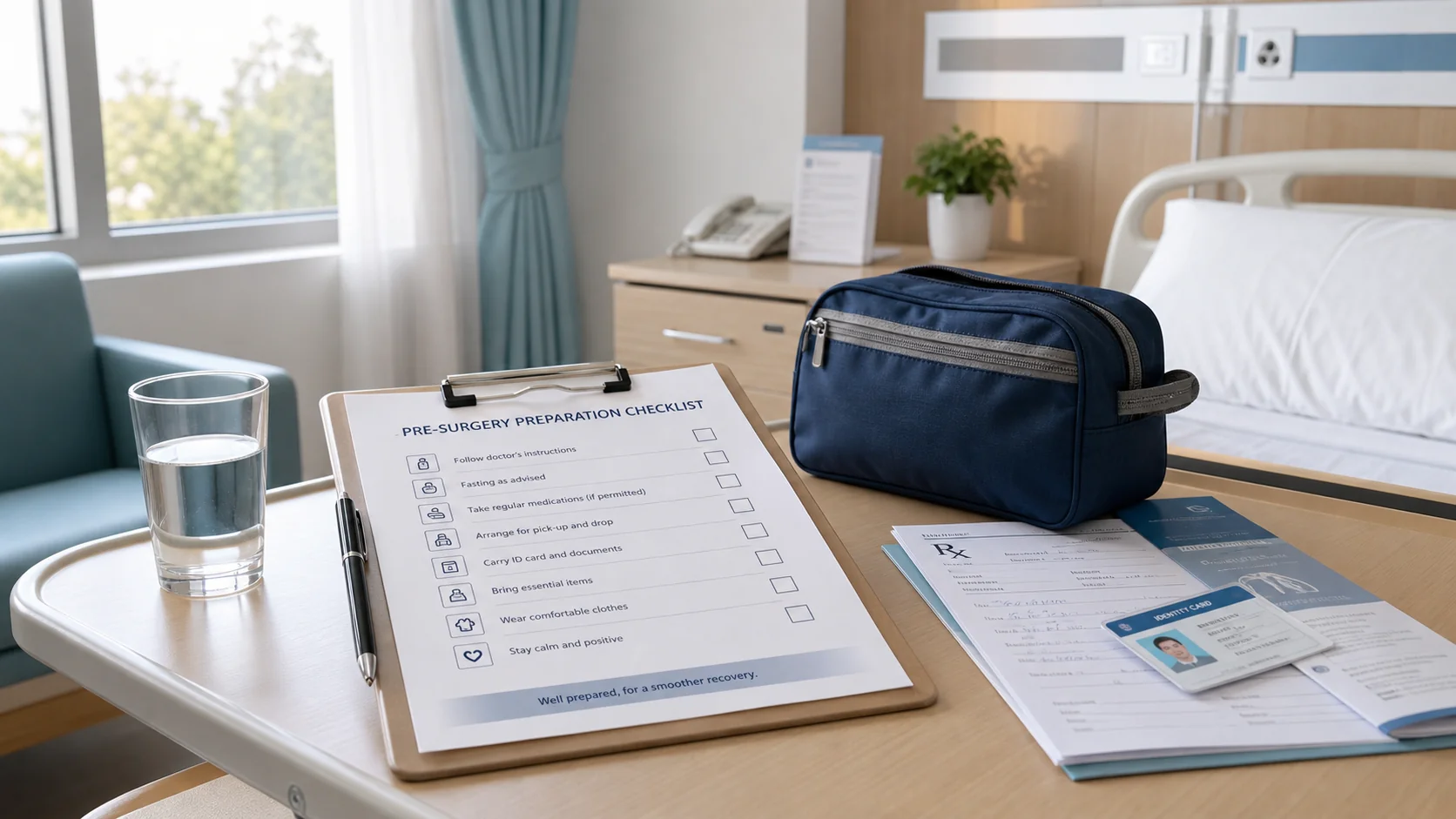
What is a surgery preparation checklist?
A surgery preparation checklist is a patient-facing list of reports, questions, medicine details, fasting instructions, consent steps, and home arrangements to confirm before an operation. It helps the medical team assess risk, prevents missed information, and makes hospital admission smoother for the patient and family.
The World Health Organization's surgical safety work highlights that safe surgery depends on reliable communication and checklist-based teamwork. Patient preparation is one small but important part of that larger safety system. Source: WHO safe surgery.
What should you ask the doctor before surgery?
Before surgery, ask questions that change decisions: why the surgery is needed, whether it is planned or urgent, what anaesthesia may be used, what risks are common for your case, and what recovery will look like. Do not leave the consultation with only a surgery date.
Use this short list during your surgeon or pre-anaesthesia visit:
| Question to ask | Why it matters |
|---|---|
| What problem is this operation meant to fix? | Keeps expectations realistic |
| Is this planned, urgent, or emergency surgery? | Helps the family plan time and risk |
| What tests are needed before admission? | Avoids last-minute delays |
| What type of anaesthesia is likely? | Helps you prepare for fasting and recovery |
| Which medicines should I take or pause? | Reduces bleeding, sugar, BP, and interaction risks |
| How long may I stay in hospital? | Helps plan attendant, room, and insurance work |
| What warning signs should I report before the surgery date? | Prevents unsafe surgery when health changes |
If your procedure is laparoscopic, this related guide explains what to do before laparoscopic surgery. For hernia patients, also read common hernia surgery questions.
Which reports and medical details should you carry?
Carry the complete medical picture, not only the newest report. Old reports help the doctor understand whether a value is stable, improving, or suddenly abnormal. This is especially useful for diabetes, blood pressure, kidney function, liver function, heart disease, pregnancy, previous surgery, and allergy history.
Bring these in one folder or phone album:
- doctor's prescription and surgery advice note
- recent blood tests, urine tests, ECG, X-ray, ultrasound, CT, MRI, or echo reports
- old reports for the same problem
- current medicine strips or a clear medicine list
- allergies or previous anaesthesia reaction details
- discharge summaries from earlier admissions
- health insurance card, TPA papers, Ayushman or policy documents if applicable
- government ID proof and emergency contact number
The NHS notes that pre-surgery assessment may include blood tests, urine tests, pregnancy tests, infection checks, and review of medicines and previous test results depending on the operation and anaesthetic. Source: NHS before surgery.
How should you handle medicines before surgery?
Medicine instructions must come from your medical team. Some medicines are continued, some are paused, and some need timing changes. The risk is highest when patients hide medicines, forget supplements, or stop important tablets without asking.
Tell the doctor about:
- blood thinners such as aspirin, clopidogrel, warfarin, apixaban, rivaroxaban, or similar medicines
- diabetes tablets, insulin, or weekly injectable diabetes medicines
- blood pressure, heart, thyroid, seizure, asthma, steroid, or psychiatric medicines
- painkillers, especially frequent ibuprofen, diclofenac, naproxen, or aspirin use
- vitamins, gym supplements, herbal products, ayurvedic medicines, and homeopathy medicines
- smoking, alcohol, tobacco, or recreational drug use
MedlinePlus advises patients to take only the medicines their surgeon has told them to take before surgery and to follow instructions about medicines that can affect bleeding. Source: MedlinePlus night before surgery.
What are fasting rules before surgery?
Fasting means stopping food and drinks for a specific time before anaesthesia or sedation. The exact timing depends on your surgery, anaesthesia plan, age, pregnancy status, diabetes medicines, and hospital instructions. Do not use internet timing as your final rule.
Confirm these four items in writing or by phone:
- last time for solid food
- last time for milk, tea, coffee, juice, or other non-clear drinks
- whether plain water is allowed, and until what time
- which morning medicines, if any, can be taken with a small sip of water
NHS patient guidance explains that patients should be clearly told whether to stop eating and drinking before hospital admission and whether usual medicines should be stopped before surgery. Source: NHS before surgery.
What should you pack for hospital admission?
Pack light, practical items. The goal is to avoid missing paperwork and make the first 24 hours easier, not to carry valuables into the hospital.
Patient bag checklist:
- reports folder and prescription file
- ID proof, insurance card, TPA or cashless papers
- loose clothes and slip-on footwear
- phone charger and spectacles if needed
- basic toiletries
- medicine list and allergy note
- one attendant's phone number written on paper
- small amount of cash or payment card
- any procedure-specific item the hospital asked for
Avoid jewellery, large cash, expensive electronics, and unnecessary valuables. If you are unsure what the hospital provides, ask before admission.
What should you do one day before surgery?
The day before surgery is for confirmation, not panic. Call the hospital if any instruction is unclear. Confirm arrival time, fasting time, medicine plan, payment or insurance documents, and who will stay with the patient.
Use this quick sequence:
- Recheck surgery date, reporting time, and hospital entrance.
- Put reports, ID, and insurance papers in one folder.
- Confirm fasting and morning medicine instructions.
- Arrange a responsible adult attendant.
- Avoid alcohol and do not start new over-the-counter medicines unless your doctor has advised them.
- Sleep early and keep the hospital contact number ready.
For gallbladder patients, planned evaluation is especially important because repeated pain with fever, vomiting, or jaundice can become urgent. Read the gallbladder stone emergency signs guide if symptoms are changing.
When should you call the doctor before planned surgery?
Call the hospital or surgeon if your health changes before the operation. A new fever, chest symptom, breathing problem, uncontrolled sugar, very high BP, active infection, vomiting, or missed fasting instruction can change the safest plan.
Contact the hospital before admission if you have:
- fever, cough, sore throat, breathing difficulty, or new infection
- chest pain, fainting, severe weakness, or new confusion
- vomiting, diarrhea, dehydration, or inability to take fluids
- very high or very low blood sugar readings
- very high blood pressure or new severe headache
- bleeding, new rash, or suspected drug allergy
- accidentally eaten or drunk after the fasting cut-off
- taken a medicine you were asked to pause, or missed an important medicine
For sudden severe symptoms, do not wait for a routine appointment. Use emergency care or call local emergency services. R.K. Hospital's emergency department is available for urgent medical assessment in Bhopal.
FAQ
What should I bring before surgery?
Bring your doctor's file, current medicines list, allergies, previous reports, insurance or payment documents, ID proof, comfortable clothes, phone charger, and one responsible attendant. If your surgeon has given a procedure-specific list, follow that first.
Can I eat or drink before surgery?
Do not guess fasting timing. Your surgery and anaesthesia team will tell you exactly when to stop food, milk, tea, and water. Eating or drinking too close to anaesthesia can be unsafe, so confirm the timing before admission.
Which medicines should I stop before surgery?
Do not stop or continue medicines on your own. Tell the doctor about blood thinners, diabetes medicines, BP medicines, painkillers, supplements, and herbal products. The team will decide what to take, pause, or adjust.
When should I call the hospital before planned surgery?
Call the hospital if you develop fever, cough, breathing trouble, chest pain, new infection, vomiting, uncontrolled sugar or BP, missed fasting instructions, or confusion about medicines before surgery.
Bottom line
A good surgery preparation checklist makes the hospital visit safer and calmer: ask the right questions, carry old and new reports, disclose every medicine and supplement, confirm fasting, pack practical items, and call the hospital if symptoms change before admission.
R.K. Hospital, Indrapuri, Bhopal provides surgical consultation, pre-anaesthesia coordination, diagnostic testing, admission support, and 24/7 emergency care. For surgery-related appointments or admission guidance, call 0755-4260605 or visit the contact page.
Part of the laparoscopic surgery, preparation and recovery guide
From this question to a practical consultation
Use this guide to prepare the history for a discussion about laparoscopic surgery, preparation and recovery. Record when the concern began, what has changed and how it affects daily activities. Bring reports and prescriptions already available; you can ask which further tests would help before arranging more investigations.
At the visit, ask what the clinician thinks is most likely and which findings support that view. If the diagnosis remains uncertain, ask how it will be clarified and which changes should prompt earlier assessment. A clear next step is more useful than collecting several possible labels from online searches.
Before leaving, confirm the purpose of each prescribed treatment, the follow-up date and who will communicate results. Keep that plan with your symptom record so a review can compare progress. Tell the clinician if the plan is difficult to follow because of work, costs, side effects or care responsibilities.
- 1
Confirm diagnosis and options
- 2
Assess fitness and obtain instructions
- 3
Procedure and discharge planning
- 4
Recovery review and activity advice
The sequence explains planned care. Urgent symptoms require prompt assessment and may change this pathway.
The assessment before a treatment decision
Before an operation, the surgeon and anaesthesia team consider the procedure and the patient’s health. Required tests and any physician review should be explained. A single standard package cannot substitute for risk assessment.
Medical guidance: MedlinePlus: Surgery · MedlinePlus: Anaesthesia
How can I prepare for an assessment of these symptoms?
Bring a symptom timeline, relevant reports, current prescriptions and your main questions. Ask how the diagnosis will be assessed, whether further tests are needed, what follow-up is planned and which changes require earlier care.
Continue with symptoms, treatment options, warning signs and related guides
Related Pages on R.K. Hospital
Read Next
- Annual Health Checkup Preparation: What to Bring, Ask, and ConfirmPatient Guide · 10 min read
- Doctor Consultation Preparation Checklist: Reports & QuestionsGeneral Health · 13 min read
- How to Prepare for a Gynecologist Appointment: A Practical ChecklistGynaecology · 9 min read
- How to Prepare for an Ultrasound: Fasting & Full BladderRadiology · 9 min read
- Best Hospital in Bhopal for Laparoscopic SurgerySurgery · 11 min read
Need a Doctor in Bhopal? Talk to R.K. Hospital
This article is for general information only and does not replace a consultation. Call, WhatsApp, or walk in 24x7 at R.K. Hospital, Indrapuri, near Bima Hospital.
226, C-Sector, Indrapuri, Raisen Road, Bhopal (M.P.) 462022 · Directions & timings · 24x7 Emergency