How to Prepare for a Gynecologist Appointment: A Practical Checklist
Prepare for a gynecologist appointment with a private symptom timeline, period details, medicine list, reports, questions, and clear guidance on urgent warning signs.
A gynecology visit can feel awkward when the concern is private, period dates are hard to remember, or you are unsure whether an examination will happen. The goal is not to arrive with a self-diagnosis. It is to give the doctor a clear timeline, accurate health information, and the questions that matter to you.
Fast rule: write one private page with your main concern, when it started, the first day of your last period, medicines and allergies, relevant reports, and three questions. This gynecologist appointment checklist takes about ten minutes and helps keep the consultation focused.
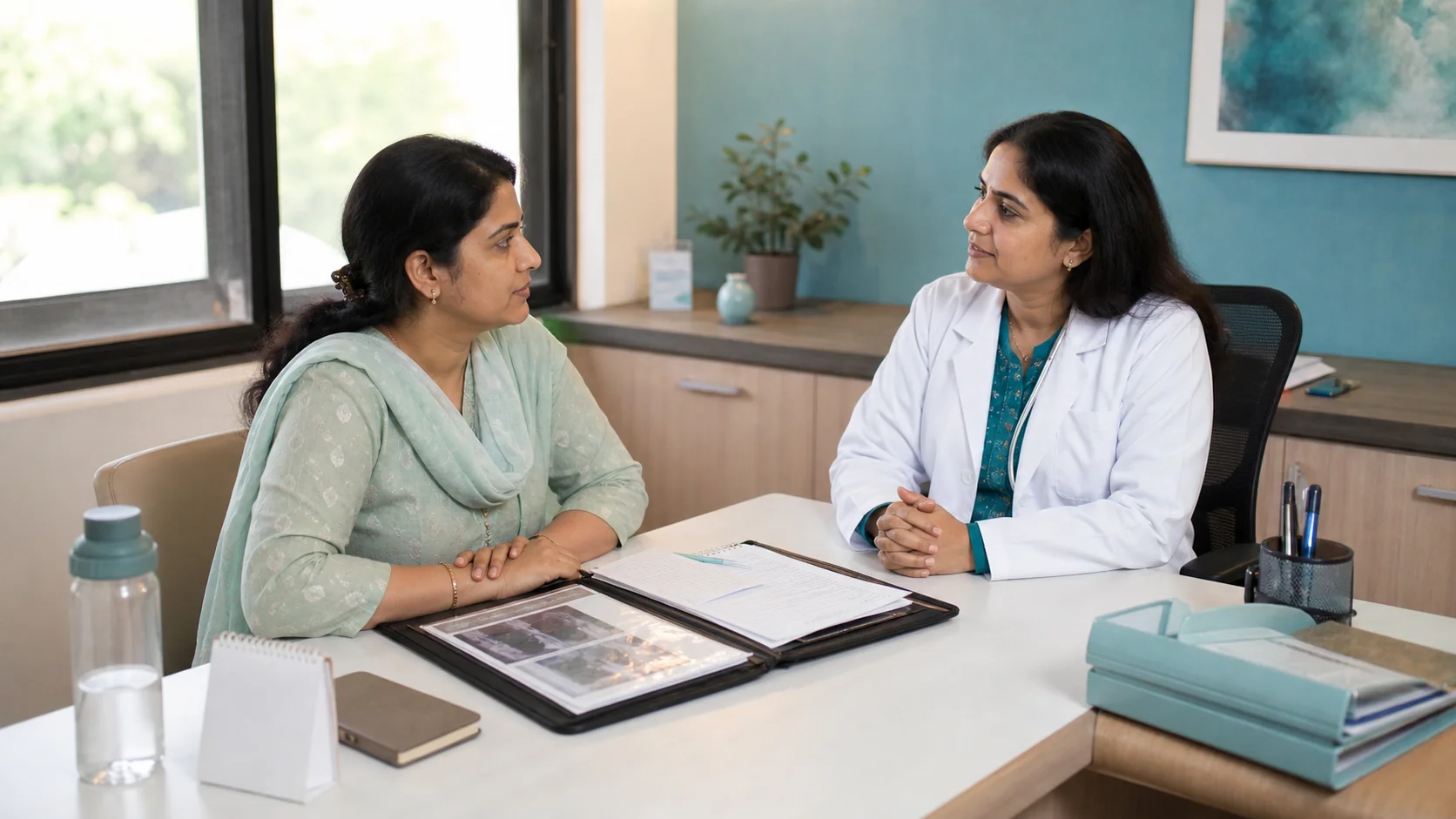
This is general patient education, not diagnosis or prescription advice. Do not start, stop, or change medicine from an online checklist. Very heavy bleeding with faintness, severe or rapidly worsening pelvic or abdominal pain, pregnancy with severe pain or bleeding, collapse, breathing difficulty, confusion, or a seriously unwell appearance needs urgent medical assessment rather than a routine appointment. For urgent help at R.K. Hospital, Indrapuri, Bhopal, call 0755-4260605.
What is a gynecologist appointment checklist?
A gynecologist appointment checklist is a short record of symptoms, menstrual and pregnancy information when relevant, medicines, allergies, prior reports, and questions prepared before a women's-health consultation. It helps the patient explain the concern accurately while leaving examination, diagnosis, and treatment decisions to the clinician.
MedlinePlus guidance on talking with your doctor recommends writing questions, bringing medicine information, and being open about symptoms. The U.S. Office on Women's Health well-woman visit guide also encourages patients to prepare questions and discuss changes in their health.
For a broader records workflow, use the first doctor visit checklist. This page adds the menstrual, pregnancy, contraception, privacy, and examination questions that may matter in gynecology.
What should you write before the appointment?
Write the main concern in one sentence, then add dates, pattern, severity, associated symptoms, and anything that changed around the same time. Describe what you noticed without trying to force the symptoms into a diagnosis found online.
Include only what applies:
- when pain, bleeding, discharge, itching, a breast concern, urinary symptom, or cycle change began
- whether the problem is constant, intermittent, improving, or worsening
- the first day of your last menstrual period and your usual cycle length
- changes in flow, timing, pain, missed periods, or bleeding between periods
- pregnancy possibility, pregnancy-test result, childbirth, miscarriage, abortion, or menopause history when relevant
- contraception currently used and any concern about it
- fever, vomiting, faintness, urinary symptoms, bowel changes, or other associated symptoms
- what you have already tried, including self-started medicines or intimate products
If dates are difficult to reconstruct, bring your calendar or period-tracking record. Do not alter a tracking app to make the pattern look regular; uncertainty is useful information too.
What should you carry to a gynecology consultation?
Carry appointment and identity details, a current medicine and allergy list, and reports directly connected to the concern. Prior ultrasound images, pathology reports, discharge summaries, operation notes, pregnancy records, and cervical-screening reports may be useful when relevant.
| Bring | When it is useful | Simple preparation |
|---|---|---|
| Symptom and cycle timeline | Most appointments | Keep it to one dated page |
| Medicine and allergy list | Every appointment | Include supplements, injections, creams, and self-started products |
| Previous ultrasound or scan | Pelvic, pregnancy, breast, or abdominal concern | Carry the written report and images when available |
| Lab or pathology reports | Tests were already performed | Bring the complete report with date, units, and reference ranges |
| Pregnancy or discharge records | Current or previous pregnancy affects the question | Arrange documents by date |
| Earlier prescriptions or procedure notes | Treatment or surgery has already occurred | Mark what was completed and what remains unclear |
Do not repeat a test merely because the appointment is approaching. Bring existing results and let the treating clinician decide whether anything needs repeating. The OPD documents checklist can help organise a larger file.
How should you prepare medicines, allergies, and pregnancy information?
List the exact name, strength when known, and usual timing of every medicine, supplement, injection, inhaler, cream, or hormonal product you use. Record allergies and what reaction occurred. Share pregnancy possibility early because it may affect the safe choice or timing of tests and medicines.
Bring medicine strips, packaging, or clear photographs if names are uncertain. Mention emergency contraception, fertility treatment, non-prescription painkillers, herbal products, and recently stopped medicines when relevant. Do not hide information because it feels embarrassing; the clinical team needs accurate facts and should handle them professionally.
Use the medicine list for a doctor visit if several products are involved. Never stop a prescribed medicine or contraception solely to prepare for the appointment unless the treating clinician has told you to do so.
Do you need to shave, wash internally, fast, or avoid your period?
Routine bathing and comfortable clothing are usually enough; special grooming is not required. Do not douche or use perfumed intimate products. Fasting, a full bladder, avoiding intercourse, or changing medicine should happen only when the clinic gives instructions for a particular test or procedure.
Use this decision rule:
- Routine consultation only: no special grooming or fasting; bring your timeline and records.
- Possible ultrasound: ask whether the ordered scan requires fasting or a full bladder; requirements vary.
- Planned sample or examination: follow the clinic's written preparation instructions and call if they are unclear.
- Period started before the visit: do not cancel automatically. Call and explain why you are attending; active bleeding may itself be the reason for review.
- Pregnant, diabetic, prone to fainting, or using time-sensitive medicine: contact the department before following any fasting instruction.
For scan-specific details, read the ultrasound fasting and full-bladder checklist. Guessing at preparation can be less useful than one quick call to the radiology or gynecology desk.
What questions should you ask the gynecologist?
Choose three questions that clarify what happens next, what remains uncertain, and which warning signs require urgent care. Add sensitive questions in writing if saying them aloud feels difficult. A consultation is the right place to discuss bleeding, pain, discharge, sexual health, fertility, contraception, pregnancy, and menopause without shame.
Useful questions include:
- What information from my history or examination is most important?
- Are tests needed, what will they help clarify, and how should I prepare?
- If an examination is suggested, what will it involve and why is it useful?
- What choices are available, and what are the benefits, limitations, or common risks?
- Which symptoms should I monitor at home?
- Which warning signs mean I should return sooner or use emergency care?
- When should I follow up, and which reports should I bring?
Before leaving, repeat the plan in your own words. The longer questions to ask a doctor guide provides prompts for tests, medicines, and follow-up.
What should you know about privacy, consent, and examinations?
You can ask why an examination is recommended, what it involves, whether alternatives exist, and who will be present. The clinician should explain the proposed examination and seek consent. You may request privacy to speak without a relative and ask whether a chaperone is available under hospital policy.
A consultation does not automatically mean an internal examination will be required. The decision depends on the concern, history, age, pregnancy status, and clinical judgment. You can ask the clinician to pause if you feel pain, distress, or need another explanation. If language, hearing, anxiety, or memory creates a barrier, use the doctor visit communication checklist.
When should you seek urgent care instead of waiting?
Do not wait for a planned gynecology appointment when bleeding, pain, pregnancy symptoms, or general illness is severe or rapidly worsening. Emergency assessment matters more than completing records or waiting for a preferred appointment slot.
Seek urgent professional help for:
- very heavy vaginal bleeding with weakness, dizziness, fainting, breathlessness, or rapid deterioration
- severe or rapidly worsening pelvic or abdominal pain
- pregnancy or possible pregnancy with severe pain, significant bleeding, fainting, shoulder-tip pain, or marked weakness
- fever with severe pelvic or abdominal pain, repeated vomiting, confusion, or a seriously unwell appearance
- collapse, seizure, major breathing difficulty, chest pain, or reduced responsiveness
- sexual assault or another immediate safety concern requiring urgent medical care
This list is not exhaustive. The NHS guidance on ectopic pregnancy symptoms explains why pregnancy with certain pain, bleeding, dizziness, or collapse symptoms needs urgent assessment. Do not use an online article to decide whether a pregnancy is ectopic or whether bleeding is “normal.”
Where can you book a gynecology appointment in Bhopal?
R.K. Hospital, Indrapuri, Bhopal provides gynecology consultation with access to radiology, pathology, General Medicine, Surgery, and 24/7 emergency support. For a routine visit, bring your private symptom and cycle timeline, medicine and allergy list, relevant reports, and three questions.
Review doctors at R.K. Hospital, see available hospital services, or use the contact page for appointment and location details. Call 0755-4260605 for assistance. If symptoms are severe or rapidly worsening, use emergency care rather than waiting for a routine slot.
Frequently Asked Questions
How should I prepare for my first gynecologist appointment?
Write your main concern and symptom timeline, note the first day of your last period and usual cycle pattern, list medicines and allergies, carry relevant reports, and prepare three questions. Ask the clinic beforehand if any examination or test needs special preparation.
Can I visit a gynecologist during my period?
Often yes, especially when bleeding or pain is the reason for the visit. Some planned examinations or tests may be easier at another time. Do not cancel automatically; call the clinic, explain the purpose of the appointment, and follow its advice.
Do I need to shave or use intimate-wash products before a gynecology visit?
No special grooming is needed. Routine bathing and clean, comfortable clothing are enough. Avoid douching or using perfumed intimate products because they may irritate tissue or affect some samples. Follow any specific instructions given by the clinic.
When do gynecology symptoms need emergency care?
Seek urgent care for very heavy bleeding with weakness or fainting, severe or rapidly worsening pelvic or abdominal pain, pregnancy with severe pain or bleeding, collapse, breathing difficulty, confusion, or any situation in which the patient appears seriously unwell.
Read Next
- Annual Health Checkup Preparation: What to Bring, Ask, and ConfirmPatient Guide · 10 min read
- Doctor Appointment Anxiety: A Calm Checklist Before Your VisitGeneral Health · 10 min read
- Doctor Consultation Preparation Checklist: Reports & QuestionsGeneral Health · 13 min read
- Follow-Up Doctor Appointment Checklist: What to Bring and AskPatient Guide · 9 min read
- Missed a Doctor Appointment? What to Do NextPatient Guide · 8 min read
Need a Doctor in Bhopal? Talk to R.K. Hospital
This article is for general information only and does not replace a consultation. Call, WhatsApp, or walk in 24x7 at R.K. Hospital, Indrapuri, near Bima Hospital.
226, C-Sector, Indrapuri, Raisen Road, Bhopal (M.P.) 462022 · Directions & timings · 24x7 Emergency