Heart Attack Symptoms in Women: Silent Signs Mistaken for Gas
Heart attack in women often shows as jaw or back pain, nausea, sweating or unusual fatigue instead of chest pain. Know the signs. 24x7 emergency in Bhopal.
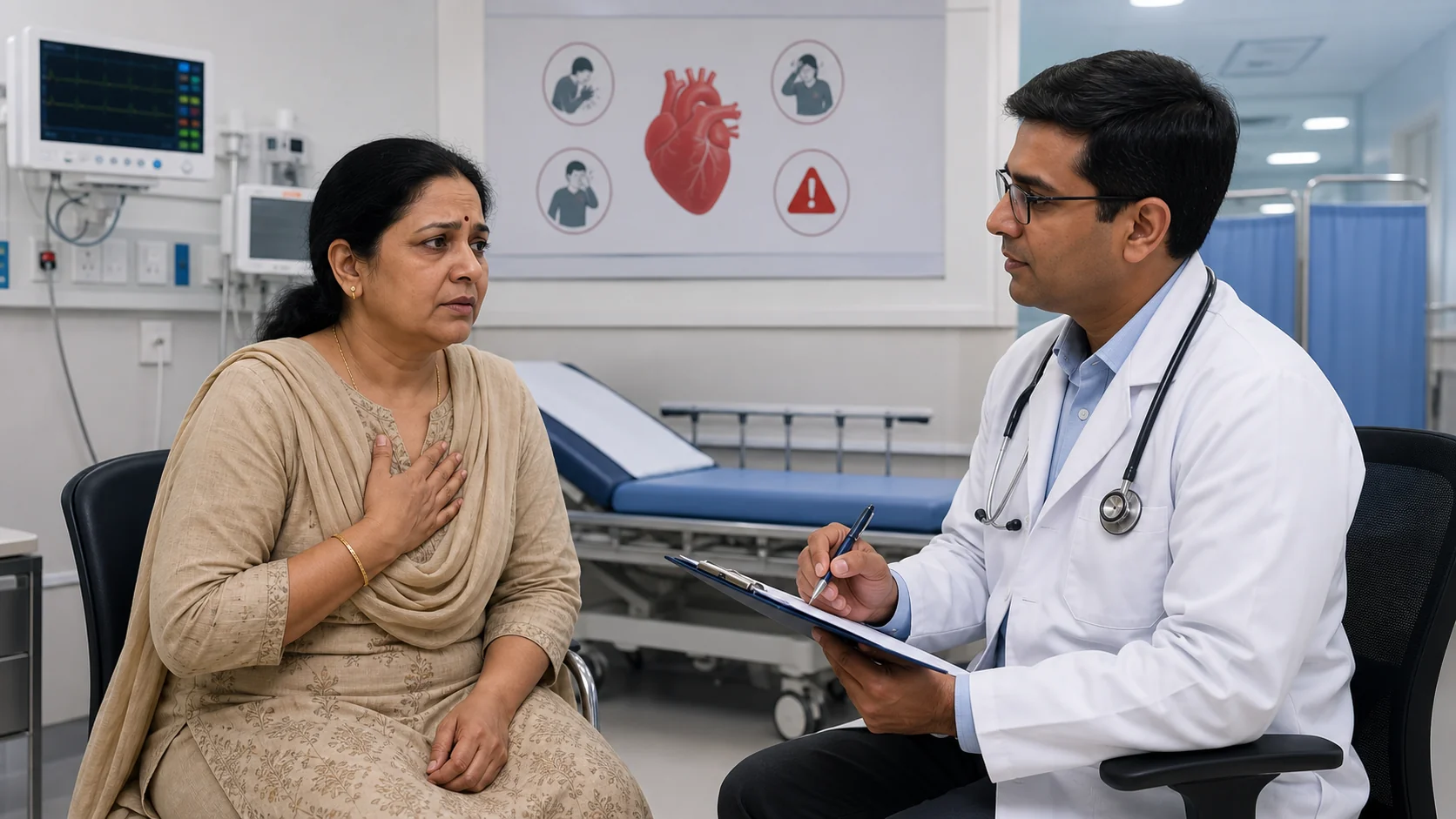
Heart attack symptoms in women are often missed because they do not always look like the dramatic "clutching the chest" scene people imagine. A woman may have chest pressure, but she may also have breathlessness, back or jaw pain, nausea, sweating, dizziness, or unusual fatigue. The painful problem is delay: families wait for symptoms to become obvious, and that can cost precious time.
Fast rule: if a woman has new chest pressure, breathlessness, sweating, fainting, pain spreading to the arm, jaw, neck, back or upper stomach, or symptoms that feel unusual and worsening, seek emergency care now. Do not try to prove it is acidity, gas, weakness, or anxiety at home.
This article is patient education, not diagnosis or prescription advice. If symptoms are severe, sudden, unusual, or worsening, call local emergency services or go to the nearest emergency department. R.K. Hospital, Indrapuri, Bhopal has 24/7 emergency support; for urgent help call 0755-4260605.
What are heart attack symptoms in women?
Heart attack symptoms in women can include chest pain or pressure, shortness of breath, back or jaw pain, arm or shoulder discomfort, nausea, vomiting, sweating, dizziness, light-headedness, unusual tiredness, or a strong sense that something is wrong. Symptoms may be intense, mild, sudden, or on-and-off.
The American Heart Association says women's most common heart attack symptom is chest pain or discomfort, but women may also have symptoms less often linked with heart attack, including shortness of breath, nausea or vomiting, and back or jaw pain. Source: American Heart Association: heart attack symptoms in women.
Watch for these warning signs:
- pressure, tightness, heaviness, squeezing, burning, or pain in the chest
- pain or discomfort in one or both arms, shoulder, back, neck, jaw, or upper stomach
- shortness of breath, with or without chest discomfort
- sweating, nausea, vomiting, or indigestion-like discomfort
- dizziness, fainting, sudden weakness, or light-headedness
- unusual tiredness that feels different from normal fatigue
- symptoms starting during exertion, stress, or while resting
- symptoms in a woman with diabetes, high BP, kidney disease, smoking history, obesity, high cholesterol, pregnancy/post-delivery risk, or previous heart disease
If the main symptom is chest pain with breathlessness, use this guide on chest pain and breathlessness emergency signs, but do not delay emergency care while reading.
Can women have a heart attack without severe chest pain?
Yes. Some women have chest discomfort that is mild, brief, or not the main symptom. A woman may notice breathlessness, nausea, back pain, jaw pain, dizziness, unusual fatigue, or upper-abdominal discomfort and not connect it to the heart. That is why "no severe chest pain" does not always mean "no emergency."
Mayo Clinic notes that chest pain is usually the most common symptom, but women, older adults, and people with diabetes may have symptoms that seem unrelated to a heart attack, such as nausea or brief pain in the neck or back. Source: Mayo Clinic: heart attack symptoms and causes.
This is the decision rule families can use:
| Symptom pattern in a woman | Safer action |
|---|---|
| Chest pressure, tightness, heaviness, or squeezing | Emergency care now |
| Breathlessness with sweating, nausea, dizziness, or weakness | Emergency care now |
| Pain spreading to arm, shoulder, jaw, neck, back, or upper stomach | Emergency care now |
| Sudden unusual fatigue with chest, breathing, nausea, or dizziness symptoms | Emergency care now |
| Mild acidity-like burning after meals, stable patient, no breathlessness or spreading pain | Same-day doctor review if new, recurring, or uncertain |
| Symptoms in diabetes, high BP, kidney disease, pregnancy/post-delivery period, or older age | Lower threshold for urgent assessment |
Do not wait for all symptoms to appear. One serious warning sign is enough.
How are female heart attack symptoms confused with acidity, gas, anxiety, or weakness?
Female heart attack symptoms can be mistaken for acidity, gas, anxiety, tiredness, cervical pain, or stomach upset because the discomfort may involve the upper abdomen, back, jaw, breathing, nausea, or fatigue. The safer approach is to judge by risk and warning signs, not by guesswork.
Common confusion points:
- upper-abdominal discomfort may be called acidity
- nausea or vomiting may be blamed on food
- breathlessness and chest tightness may be labelled anxiety
- back, shoulder, or jaw discomfort may be treated as muscle pain
- unusual fatigue may be ignored as household, work, or sleep stress
- diabetes may reduce or change the pain sensation in some patients
The CDC lists heart attack symptoms such as chest pain or discomfort, shortness of breath, jaw/neck/back/arm/shoulder pain, nausea, light-headedness, and unusual tiredness. Source: CDC: about heart attack symptoms.
For non-emergency symptoms that feel panic-like, anxiety symptoms may help with background understanding. But anxiety should not be used as a home diagnosis when symptoms are new, severe, spreading, or linked with breathlessness, sweating, fainting, or weakness.
When should a woman go to the emergency room immediately?
A woman should go to emergency care immediately if she has new chest pressure, shortness of breath, sweating, fainting, severe weakness, blue lips, confusion, or pain spreading to the arm, jaw, neck, back, shoulder, or upper stomach. Symptoms that are sudden, unusual, or worsening should be treated as urgent.
Do not drive yourself. Arrange safe transport, call emergency help, or go to the nearest emergency department.
Urgent warning signs include:
- chest pain, heaviness, pressure, tightness, or squeezing lasting more than a few minutes or coming back repeatedly
- breathlessness at rest or breathlessness that feels different from normal exertion
- sweating, nausea, vomiting, dizziness, or fainting with chest or upper-body discomfort
- pain spreading to arm, shoulder, jaw, neck, back, or upper stomach
- severe weakness, confusion, drowsiness, or collapse
- blue or grey lips, very low oxygen reading, or inability to speak normally
- symptoms in a woman with diabetes, BP, heart disease, kidney disease, recent surgery, pregnancy/post-delivery risk, or older age
The NHS advises urgent medical help for chest pain that feels crushing or squeezing, spreads to the arm, neck or jaw, or comes with shortness of breath, nausea, sweating, or pale/blue/grey skin. Source: NHS: heart attack.
If breathlessness is the most visible symptom, read difficulty breathing: when to go to hospital only if the patient is stable. Otherwise, seek emergency care first.
What should you do before reaching hospital?
The easiest safe path is to stop activity, keep the patient seated or lying safely, call for help, and bring key medical information. Do not give extra tablets, painkillers, BP medicines, aspirin, home remedies, or antacids as a substitute for emergency assessment unless a doctor or emergency team has specifically advised it for that patient.
Quick checklist:
- stop walking, climbing stairs, cooking, cleaning, exercise, or other physical activity
- make the patient sit or lie in a comfortable safe position
- call local emergency services or arrange safe transport to the nearest emergency department
- do not let the patient drive herself
- note the exact time symptoms started
- write down symptoms in order: chest, breathing, sweating, nausea, pain spread, dizziness, weakness
- bring current medicines, allergies, BP/sugar records, old ECGs, discharge summaries, and recent test reports
- tell the team about diabetes, high BP, kidney disease, heart disease, pregnancy/post-delivery status, smoking, blood thinner use, or previous surgery
If the patient becomes unconscious, is not breathing normally, or has no pulse, call emergency services immediately and follow dispatcher instructions for CPR if you are trained or guided.
What happens in the emergency room for possible heart attack symptoms?
In the emergency room, doctors first check whether the patient is stable and whether the heart, oxygen level, blood pressure, and circulation need urgent support. The team may do tests before giving a final explanation because early symptoms can look similar across heart, lung, stomach, anxiety, and muscle problems.
Depending on symptoms and examination, emergency assessment may include:
- pulse, blood pressure, oxygen saturation, respiratory rate, and temperature
- ECG
- blood sugar
- blood tests, including cardiac markers when clinically needed
- chest X-ray or other imaging depending on symptoms
- medicines, oxygen, monitoring, observation, referral, admission, or transfer when advised by the treating doctor
For the step-by-step patient flow, read what happens in a hospital emergency room. If BP is very high with chest pain, breathlessness, severe headache, confusion, or weakness, this guide on high BP emergency symptoms explains why urgent assessment matters.
Which questions will the doctor ask?
Clear answers help doctors act faster. If the patient is stable enough, the family should be ready with timing, symptom pattern, risk factors, and medicines. If the patient is too uncomfortable to speak, one family member should answer calmly.
Useful details:
- When did symptoms start?
- Did symptoms start suddenly or gradually?
- Is there chest pressure, tightness, burning, heaviness, or pain?
- Does discomfort spread to arm, shoulder, jaw, neck, back, or upper stomach?
- Is there breathlessness, sweating, nausea, vomiting, dizziness, fainting, palpitations, or unusual fatigue?
- Did it start during walking, stairs, stress, eating, sleep, or rest?
- Is there diabetes, high BP, heart disease, kidney disease, thyroid disease, pregnancy, recent delivery, smoking, or high cholesterol?
- Which medicines are being taken, including BP tablets, diabetes medicines, blood thinners, painkillers, hormones, or supplements?
- Is there an old ECG, echo, angiography report, discharge summary, or previous admission record?
If symptoms have been recurring for days or weeks but are not active right now, write a short timeline before the doctor visit. This symptom diary before doctor visit gives a simple format.
When should Bhopal families come to R.K. Hospital?
Come to emergency care immediately for active chest pressure, breathlessness, sweating, fainting, spreading pain, severe weakness, blue lips, confusion, or symptoms that feel sudden, unusual, or worsening. For mild, recurring, or unclear symptoms without red flags, book a doctor visit rather than repeatedly self-treating acidity or anxiety.
R.K. Hospital, Indrapuri, Bhopal provides 24/7 emergency assessment, ECG, vitals monitoring, oxygen support, blood tests, and doctor review. If a higher-level cardiac intervention or transfer is needed, the emergency team can guide the next step after assessing and stabilizing the patient.
For urgent help, call 0755-4260605 or visit the emergency department. For non-emergency appointments, use the contact page or review available hospital services.
FAQ
What are common heart attack symptoms in women?
Common heart attack symptoms in women include chest pain or pressure, shortness of breath, pain in the back, jaw, neck, shoulder or arm, nausea, sweating, dizziness, unusual tiredness, or a feeling that something is seriously wrong. Symptoms can be mild or come and go.
Can women have a heart attack without severe chest pain?
Yes. Chest discomfort is still common, but women may also have symptoms such as breathlessness, nausea, back or jaw pain, dizziness, or unusual fatigue. Do not wait for severe chest pain before seeking emergency care if symptoms feel serious or unusual.
When should a woman go to the emergency room for possible heart attack symptoms?
Go to emergency care immediately for new chest pressure, breathlessness, sweating, fainting, severe weakness, pain spreading to the arm, jaw, neck or back, blue lips, confusion, or symptoms that are sudden, unusual, or worsening.
Can acidity or anxiety feel like a heart attack?
Acidity or anxiety can sometimes cause chest discomfort, nausea, or breathlessness, but heart attack warning signs cannot be safely ruled out at home. New, severe, spreading, or unusual symptoms need doctor assessment.
Bottom line
Heart attack symptoms in women can be obvious, but they can also be confusing: chest pressure, breathlessness, jaw or back pain, nausea, sweating, dizziness, or unusual fatigue. The safest decision is simple: if symptoms are new, severe, spreading, unusual, or worsening, do not wait at home.
R.K. Hospital, Indrapuri, Bhopal has 24/7 emergency support for chest pain, breathlessness, fainting, severe weakness, and other urgent symptoms. Call 0755-4260605 or come to the emergency department.
Where this guide fits in urgent care
Use this information to recognise when prompt assessment is needed. Severe or rapidly worsening symptoms should be assessed through the nearest appropriate emergency service.
Emergency care, warning signs and contact informationRelated Pages on R.K. Hospital
Read Next
- Women Mein Anemia Symptoms in Hindi: Test Aur Warning SignsWomen's Health · 7 min read
- Appendix Symptoms in Women: Gas, Period Pain, Ya Emergency?Surgery · 8 min read
- Gallbladder Pain Symptoms in Women: When to Suspect StonesSurgery · 3 min read
- Women Mein Thyroid Symptoms in Hindi: Test Aur Warning SignsGeneral Medicine · 8 min read
- UTI Symptoms in Women in Hindi: Jalan, Bukhar, Kab JayeinGynaecology · 11 min read
Need a Doctor in Bhopal? Talk to R.K. Hospital
This article is for general information only and does not replace a consultation. Call, WhatsApp, or walk in 24x7 at R.K. Hospital, Indrapuri, near Bima Hospital.
226, C-Sector, Indrapuri, Raisen Road, Bhopal (M.P.) 462022 · Directions & timings · 24x7 Emergency