Poisoning First Aid in Hindi: Zeher Ya Chemical Ke Baad Kya Karein
Medicine, chemical, fumes ya pesticide poisoning mein vomiting force na karein. Safe first aid, emergency signs aur hospital kab jaana hai samjhein.
Medicine overdose, household cleaner, pesticide, fuel, unknown liquid, poisonous fumes, or contaminated food ke baad guessing dangerous hai. Fast rule: vomiting force mat karein, home remedy mat dein, ongoing exposure safely stop karein, product container sambhal kar rakhein, and urgent medical help lein.
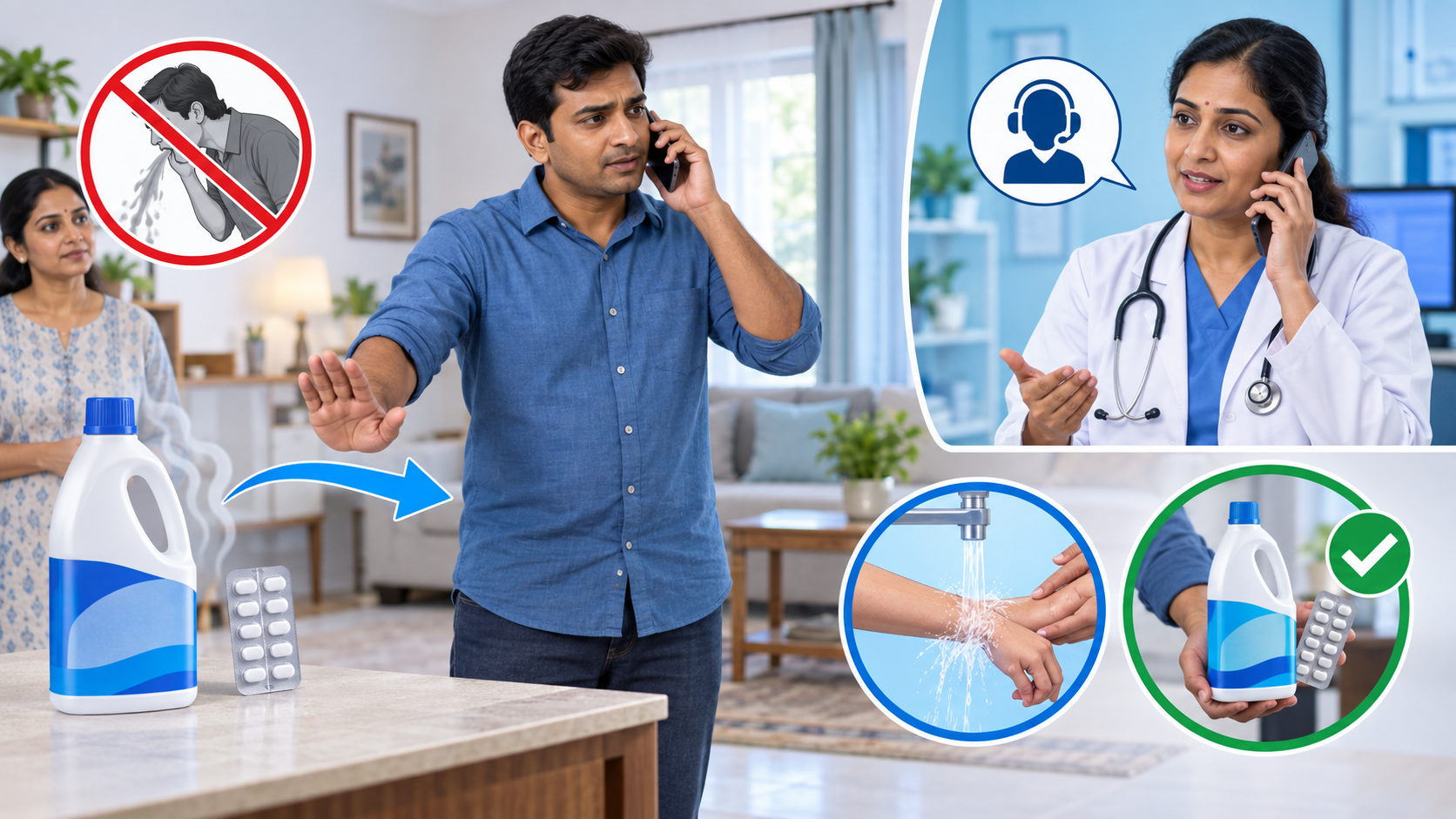
This is patient education, not diagnosis or prescription. Poisoning ka risk substance, dose, route, time, age, body weight, medicines, and symptoms par depend karta hai. Symptoms ka wait karna unsafe ho sakta hai because some toxic effects are delayed.
Poisoning first aid: sabse pehle kya karein?
Poisoning first aid means stopping further exposure without putting yourself at risk, checking breathing and alertness, calling emergency help, and preserving information about the substance. Do not taste, smell closely, or touch an unknown chemical to identify it.
Use this sequence:
- Protect yourself from fumes, liquid, powder, needles, or contaminated clothing.
- Move the person to fresh air only if you can do so safely.
- Check response and normal breathing. If absent, call emergency services and begin CPR only if trained.
- Remove the substance from the mouth if easily visible, but do not sweep blindly with fingers.
- Do not induce vomiting or give milk, lemon, salt water, oil, or medicine unless a medical professional specifically directs it.
- Keep the bottle, strip, packet, label, photo, approximate amount, and exposure time.
- Go to emergency care for symptoms, deliberate ingestion, unknown substance, child exposure, or any uncertain dose.
The World Health Organization poisoning guidance emphasizes prevention and rapid medical attention for toxic exposures. For immediate first-aid principles, NHS poisoning guidance advises against making the person sick or giving food or drink while arranging medical help.
Poisoning ke emergency signs kya hain?
Breathing difficulty, reduced consciousness, seizure, severe confusion, collapse, chemical burns, or rapidly worsening symptoms require emergency care now. A person can also look well initially after a dangerous dose, so suspected exposure should be discussed urgently even before symptoms appear.
Emergency signs include:
- slow, difficult, noisy, or stopped breathing
- blue or grey lips, severe wheeze, or choking
- unconsciousness, collapse, severe drowsiness, or inability to wake normally
- seizure, severe agitation, confusion, or hallucination
- repeated vomiting or blood in vomit
- burns, redness, drooling, or severe pain around the mouth
- severe chest pain, abdominal pain, sweating, or abnormal pulse
- pinpoint or unusually large pupils with altered behavior
- weakness, poor coordination, or slurred speech
- deliberate overdose or self-harm concern
If the patient is unconscious but breathing, place them on their side if there is no suspected neck/spine injury and monitor breathing while help is arranged. For any seizure, follow the seizure first-aid guide.
Vomiting force kyun nahi karni chahiye?
Induced vomiting can cause choking, aspiration into the lungs, or a second burn when a corrosive substance comes back through the throat. It may also delay the treatment that matters. Salt water and other home methods can themselves cause harm.
Do not give:
- salt water, mustard water, or fingers in the throat
- milk, lemon, oil, ghee, or alcohol as an “antidote”
- activated charcoal unless a clinician specifically recommends and supervises it
- another medicine to “cancel” the first medicine
- food or drink to a drowsy, vomiting, or confused patient
The Mayo Clinic poisoning first-aid guidance explicitly advises not to induce vomiting and recommends getting expert help promptly.
Exposure type ke hisaab se safe first aid kya hai?
The safest first response changes by exposure route, but the rule stays the same: stop exposure, avoid contaminating yourself, rinse external chemicals with water when appropriate, and get professional advice. Never mix chemicals during cleanup because toxic fumes can form.
| Exposure | Immediate safer action | Avoid |
|---|---|---|
| Swallowed medicine or chemical | Remove remaining material from mouth; call emergency help; keep container | Vomiting, home antidotes, food/drink without advice |
| Fumes or gas | Move to fresh air only if safe; ventilate from outside if possible | Entering a contaminated closed room without protection |
| Chemical on skin | Remove contaminated clothing; rinse with running water | Rubbing, neutralizing with another chemical |
| Chemical in eye | Remove contact lens if easy; rinse continuously with clean water | Eye drops or rubbing the eye |
| Dry chemical powder | Brush powder off gently before rinsing | Adding water before removing reactive powder |
| Unknown bite or sting | Move away from source; keep patient still; seek advice | Cutting, sucking, tight tourniquet, unproven remedies |
For chemical splashes, CDC/NIOSH first-aid guidance commonly prioritizes removing contaminated clothing and prolonged water irrigation, while substance-specific instructions can differ. Bring the label so clinicians can identify the exact product.
Medicine overdose mein kya karein?
A suspected overdose needs urgent professional assessment even if the person has no symptoms. Some medicines can cause delayed liver, heart, kidney, breathing, or brain effects. Never wait for sleepiness or vomiting to prove that the dose was dangerous.
Collect these details without delaying care:
- medicine name, strength, and formulation
- how many tablets or how much liquid may be missing
- approximate time of ingestion
- patient age and approximate weight
- all regular medicines, alcohol, or other substances involved
- whether the ingestion may have been intentional
Do not leave the person alone. If self-harm may be involved, remove further access only when safe, respond without blame, and tell the emergency team clearly. If paracetamol may be involved, do not rely on the absence of early symptoms; use the paracetamol safety guide only as background and seek urgent care.
Child ne cleaner ya medicine pee li toh kya karein?
Any suspected poisoning in a child deserves immediate professional advice because a small quantity can be significant for a lower body weight. Do not wait for the child to become sleepy or vomit.
- take the product away and wipe visible material from the mouth
- do not force vomiting or give milk/home remedies
- check breathing, alertness, burns, drooling, coughing, and behavior
- note the time and possible amount
- carry the original container or clear photos of every label panel
- seek emergency care immediately for symptoms, unknown quantity, caustic chemicals, pesticides, hydrocarbons, or medicines
For other urgent child symptoms, see when to take your child to the hospital.
Hospital le jaate waqt kya information useful hai?
The product identity and timeline can change emergency decisions, so bring evidence without exposing anyone else. Put leaking containers in a sealed secondary bag and keep them away from children and passengers.
Bring or report:
- bottle, packet, medicine strip, or label photos
- product name, ingredients, strength, and manufacturer
- estimated amount and exact or approximate time
- route: swallowed, inhaled, skin, eye, injection, bite, or sting
- vomiting, coughing, burns, confusion, seizure, or breathing changes
- existing diseases, pregnancy, allergies, and regular medicines
- any first aid already given
The emergency-room guide explains triage and what families can expect on arrival. Stable families can also review the medicine-list checklist.
RK Hospital mein poisoning assessment kaise ho sakta hai?
R.K. Hospital, Indrapuri, Bhopal provides 24/7 emergency assessment for suspected medicine overdose, chemical exposure, pesticide exposure, fumes, vomiting, altered alertness, and breathing problems. Treatment depends on the substance, time, symptoms, examination, and available evidence; there is no universal home antidote.
The team may assess breathing, circulation, alertness, pupils, skin or mouth burns, oxygen level, ECG need, blood sugar, medicine history, product label, and whether observation, tests, specific treatment, admission, or referral is appropriate.
For a stable enquiry, call 0755-4260605, view hospital services, or use the contact page. For breathing trouble, unconsciousness, seizure, severe drowsiness, confusion, collapse, chemical burns, deliberate overdose, or rapidly worsening symptoms, go to the nearest emergency department immediately.
Frequently Asked Questions
Poisoning mein sabse pehle kya karein?
Person ko ongoing exposure se safely door karein, breathing and alertness check karein, emergency help call karein, and product container or medicine strip sambhal kar rakhein. Vomiting force na karein and bina professional advice kuch khilaye-pilayein nahi.
Zeher khane ke baad ulti karwani chahiye?
Nahi. Vomiting force karne se caustic chemical dobara food pipe ko burn kar sakta hai or vomit lungs mein ja sakta hai. Emergency clinician or poison-information professional ki specific advice follow karein.
Chemical skin ya aankh par gir jaaye toh kya karein?
Contaminated clothes carefully remove karein and exposed skin or eye ko clean running water se rinse karein. Powder chemical ho toh pehle dry powder gently brush away karein. Severe pain, vision change, breathing trouble, or large exposure mein emergency care lein.
Poisoning ke emergency signs kya hain?
Breathing trouble, blue lips, unconsciousness, seizure, confusion, severe drowsiness, repeated vomiting, burns around mouth, severe chest or abdominal pain, abnormal pulse, collapse, or rapidly worsening symptoms are emergency signs.
Hospital le jaate waqt kya saath le jayein?
Product bottle, label, medicine strip, pesticide packet, approximate amount and time, patient medicines, and any vomit photo if safely available le jayein. Container ko leak-proof bag mein rakhein and direct exposure avoid karein.
Bottom line
Suspected poisoning mein symptoms ka wait mat karein. Exposure stop karein without risking yourself, breathing and alertness check karein, vomiting force na karein, home antidote na dein, product evidence sambhal kar rakhein, and urgent professional help lein. Severe symptoms, child exposure, unknown substance, pesticide, caustic cleaner, deliberate overdose, or uncertain amount deserves emergency assessment.
R.K. Hospital, Indrapuri, Bhopal provides 24/7 emergency support for suspected poisoning and overdose. Call 0755-4260605 for a stable enquiry; for severe or worsening symptoms, use the nearest emergency service without delay.
Read Next
- Fits Aane Par Kya Karein: Seizure First Aid Aur Hospital Kab JayeinEmergency · 9 min read
- Allergic Reaction Symptoms: When Is It Anaphylaxis and an Emergency?Emergency Care · 9 min read
- Appendicitis Symptoms: When Is It an Emergency?Surgery · 5 min read
- Chest Pain and Breathlessness: When Is It a Heart Emergency?Emergency · 10 min read
- First Doctor Visit Checklist: What to Bring and AskGeneral Health · 11 min read
Need a Doctor in Bhopal? Talk to R.K. Hospital
This article is for general information only and does not replace a consultation. Call, WhatsApp, or walk in 24x7 at R.K. Hospital, Indrapuri, near Bima Hospital.
226, C-Sector, Indrapuri, Raisen Road, Bhopal (M.P.) 462022 · Directions & timings · 24x7 Emergency