Home Blood Pressure Log for a Doctor Visit: What to Record and Bring
Prepare a useful home blood pressure log for your doctor: correct measurement steps, a simple table, medicine context, questions, and emergency warning signs.
A home BP monitor can produce dozens of numbers, but a doctor cannot reliably interpret a page of readings without dates, measurement technique, symptoms, and medicine timing. The useful outcome is not the lowest possible reading before the appointment. It is a consistent record that shows what usually happens at home.
Fast rule: record morning and evening readings only on the schedule your clinician recommends, use the same correct technique each time, and add symptoms plus medicine timing. Bring the complete log and the monitor to the visit when practical. Never change medicine just to improve the log.
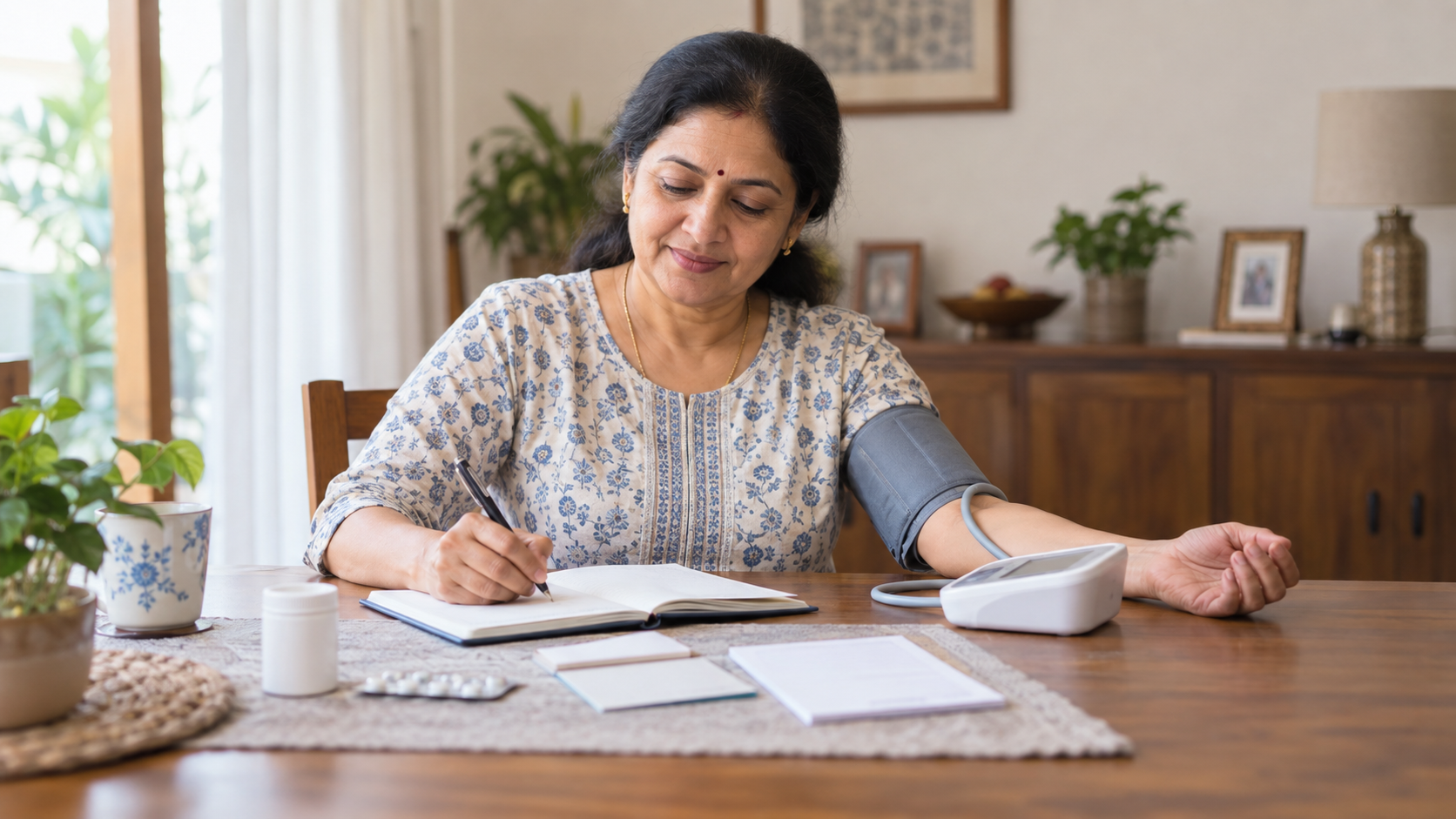
This article is general patient education, not diagnosis or prescription advice. Blood pressure targets and monitoring schedules differ between people. Do not start, stop, double, skip, or change medicine based on this page or one reading. Seek emergency care for chest pain, major breathing difficulty, fainting, severe confusion, seizure, new one-sided weakness or numbness, trouble speaking, sudden vision change, or rapid deterioration. R.K. Hospital, Indrapuri, Bhopal has 24/7 emergency support; call 0755-4260605.
What is a home blood pressure log?
A home blood pressure log is a dated record of blood pressure and pulse readings taken outside a clinic, together with enough context to help a clinician interpret the pattern. A useful log identifies the time, arm, symptoms, medicine timing, and unusual circumstances. It supports a clinical review; it does not diagnose hypertension or set a treatment plan.
Home readings can help show whether clinic and day-to-day measurements differ. The American Heart Association's home-monitoring guidance recommends an automatic, validated upper-arm monitor and stresses that home monitoring does not replace doctor visits. The CDC's blood-pressure measurement guidance also explains that posture, recent activity, caffeine, smoking, and talking can affect a reading.
What should you record in a blood pressure diary?
Record the number and the conditions around it. For every scheduled measurement, write the date, clock time, systolic and diastolic values, pulse, arm used, symptoms, and whether it was before or after regular medicine. Add only relevant context, such as pain, fever, poor sleep, caffeine, exercise, or a missed dose.
| Date and time | BP and pulse | Arm | Medicine timing | Symptoms and context |
|---|---|---|---|---|
| 17 Sep, 8:00 am | Copy the monitor values and units | Left/right | Before or after the usual dose | No symptoms; rested five minutes |
| 17 Sep, 8:00 pm | Copy the monitor values and units | Left/right | Time of regular medicines | Headache, pain, fever, stress, caffeine, or exercise if relevant |
Do not erase readings that look unusual, round numbers, or copy only the best values. Mark an entry if the cuff slipped, the patient was talking, or the measurement was taken immediately after climbing stairs. Those notes may explain why one value differs from the wider pattern.
For a broader record of pain, fever, sugar, oxygen, and other symptoms, use the symptom diary before a doctor visit. If medicine names or doses are unclear, prepare a medicine list for the doctor or carry clear photos of every label.
How do you measure blood pressure correctly at home?
Use the same careful setup each time: prepare for 30 minutes, rest quietly for five minutes, sit with proper support, place the correct cuff on a bare upper arm, and remain silent. Follow the timing and number of readings recommended by your clinician rather than creating your own intensive schedule.
Use this checklist:
- Avoid exercise, smoking, and caffeinated drinks for at least 30 minutes before measurement.
- Empty your bladder, then sit quietly for five minutes.
- Sit in a chair with the back supported and both feet flat on the floor.
- Keep legs uncrossed and support the bare arm at heart level.
- Use the correct cuff size and position it according to the device instructions.
- Do not talk, text, watch upsetting content, or move during the reading.
- If your clinician requested repeat readings, leave the advised interval and record all results.
The American Medical Association's Target: BP patient guide provides a similar preparation and positioning checklist. Device instructions still matter, and patients with limited arm movement, an irregular heartbeat, pregnancy, dialysis access, previous lymph-node surgery, or another special circumstance should ask a clinician which arm, cuff, and method are appropriate.
Which monitor should you bring to the doctor?
Bring the home monitor you actually use, its cuff, and its saved history if transport is practical. A clinician or trained staff member may check cuff fit, observe technique, compare the device with a clinic measurement, and help identify errors. Do not buy a replacement solely because one result differs from a clinic reading.
An automatic upper-arm device is generally preferred over wrist or finger monitors for routine home use. Look for a device validated for the relevant patient group and an upper-arm circumference range that fits. The international STRIDE BP validated-device list and the US ValidateBP listing are useful references, but availability differs by country; ask the treating clinician for local guidance.
Bring these items:
- the monitor, cuff, case, and instructions if available
- the complete paper or app log, not selected screenshots
- current medicine strips, bottles, or a written list
- the last prescription and relevant recent reports
- three questions, with the most important one first
How many days of readings should you show the doctor?
Use the duration and schedule your clinician requested because the correct plan depends on why blood pressure is being checked. If no schedule was provided, contact the clinic rather than measuring repeatedly throughout the day. More readings can increase anxiety without necessarily improving the clinical picture.
The AHA commonly describes taking readings at the same time each day and recording multiple readings, while clinical protocols may use several days of morning and evening measurements. That is general guidance, not a personalized instruction. Pregnancy, symptoms, a recent medicine change, kidney or heart disease, and suspected very high or low blood pressure may require a different plan.
Use the log to answer four questions at the appointment:
- What is the usual pattern rather than the highest single number?
- Are readings different before and after regular medicine?
- Do dizziness, headache, chest symptoms, weakness, or other symptoms occur with particular readings?
- Could technique, cuff fit, pain, poor sleep, illness, or another factor be affecting the pattern?
What should you ask at the blood pressure appointment?
Ask for a written, personalized plan: your target range, how often to measure, what symptoms matter, what to do with unusual readings, and when to follow up. Repeat the plan in your own words before leaving so mistakes can be corrected.
Choose the questions that fit your situation:
- Is my cuff size and measurement technique correct?
- What target range applies to me, and does it differ during pregnancy, illness, or recovery?
- When and how often should I measure at home?
- Which reading or symptom should prompt a same-day call?
- Which warning signs mean I should go directly to emergency care?
- Could any prescribed medicine, over-the-counter product, supplement, painkiller, or decongestant affect my readings?
- What should I do if I miss a dose? Ask for instructions specific to the medicine; do not guess.
- When should the monitor or cuff be checked again?
For a complete appointment file, see the OPD visit documents checklist. After the consultation, use the follow-up appointment checklist to record the agreed monitoring schedule, tests, medicine instructions, and next review date.
What mistakes make a home BP log less useful?
The most common failures are inconsistent technique, an unsuitable cuff, selective recording, excessive checking, and changing medicine without advice. A clean-looking log is not the goal; an honest and interpretable record is.
| Mistake | Better approach |
|---|---|
| Measuring immediately after stairs, tea, coffee, smoking, or exercise | Prepare and rest as instructed, then note unavoidable exceptions |
| Cuff over clothing or unsupported arm | Place the correct cuff on a bare, supported upper arm |
| Recording only high or only reassuring values | Record every scheduled reading in order |
| Checking repeatedly because one value is worrying | Recheck according to clinical advice and contact a clinician when appropriate |
| Taking extra or fewer tablets to change a reading | Keep the prescribed plan and seek clinician advice |
| Comparing devices without checking technique and units | Bring the actual monitor for review |
If home measurement is increasing anxiety, tell the clinician. A simpler schedule or supervised technique review may be safer than constant checking.
When should you seek urgent help instead of waiting for the appointment?
Do not wait for a routine visit or keep repeating measurements when severe symptoms suggest an emergency. Call local emergency services or go to an emergency department for chest pain, major breathing difficulty, fainting, severe confusion, seizure, new weakness or numbness, trouble speaking, sudden vision change, or rapid deterioration.
The AHA advises emergency help when blood pressure is above 180/120 mm Hg and symptoms such as chest pain, shortness of breath, weakness, numbness, vision change, or difficulty speaking are present. If a reading is above 180/120 without those symptoms, wait at least one minute, repeat it, and contact a healthcare professional promptly for guidance. Follow any individualized emergency plan already given by the treating team.
Do not drive yourself if you are impaired. Do not delay emergency care to complete the diary or make the reading look better. For more detail, read high BP symptoms and emergency warning signs.
Where can you review a home BP log in Bhopal?
R.K. Hospital, Indrapuri, Bhopal provides General Medicine consultation and 24/7 emergency assessment. For a routine review, bring the complete home blood pressure log, monitor and cuff, medicine list, last prescription, relevant reports, and three priority questions.
Review doctors at R.K. Hospital, explore hospital services, or use the contact page for appointment and location information. For urgent help, call 0755-4260605. Severe or rapidly worsening symptoms need emergency assessment, not a routine appointment.
Frequently Asked Questions
What should a home blood pressure log include?
Record the date, time, systolic and diastolic readings, pulse, which arm was used, symptoms, medicine timing, and relevant context such as pain, illness, caffeine, exercise, or a missed dose. Bring the monitor and the complete log to the appointment when practical.
How should I measure blood pressure at home before a doctor visit?
Use a validated automatic upper-arm monitor with the correct cuff size. Avoid exercise, caffeine, and smoking for 30 minutes, empty your bladder, sit quietly for five minutes, support your back and arm, keep feet flat, and do not talk during measurement. Follow your clinician's schedule.
Should I change blood pressure medicine if a home reading is high or low?
Do not start, stop, double, skip, or change blood pressure medicine based only on this article or one home reading. Note the value and symptoms, repeat the measurement correctly when safe, and contact the treating clinician for advice. Severe symptoms require urgent assessment.
When is a blood pressure reading an emergency?
Seek emergency help for chest pain, major breathing difficulty, fainting, severe confusion, seizure, new weakness or numbness, trouble speaking, sudden vision change, or rapid deterioration. A reading above 180/120 mm Hg with such symptoms needs emergency care; do not delay to finish the log.
Need Medical Advice?
This article is for informational purposes only. For personalized medical advice, please consult a doctor at R.K. Hospital & Research Centre.
Book Appointment: 0755-4260605