Medical History for Doctor Visit: What Patients Should Tell Before OPD
Medical history for doctor visit checklist: symptoms, old reports, medicines, allergies, surgeries, family history, pregnancy, and emergency signs before OPD in Bhopal.
Many OPD consultations become slower because the patient remembers the current symptom but forgets the medical history behind it: old diabetes medicine, a previous surgery, a drug allergy, a hospital admission, pregnancy possibility, or a report that changed last month.
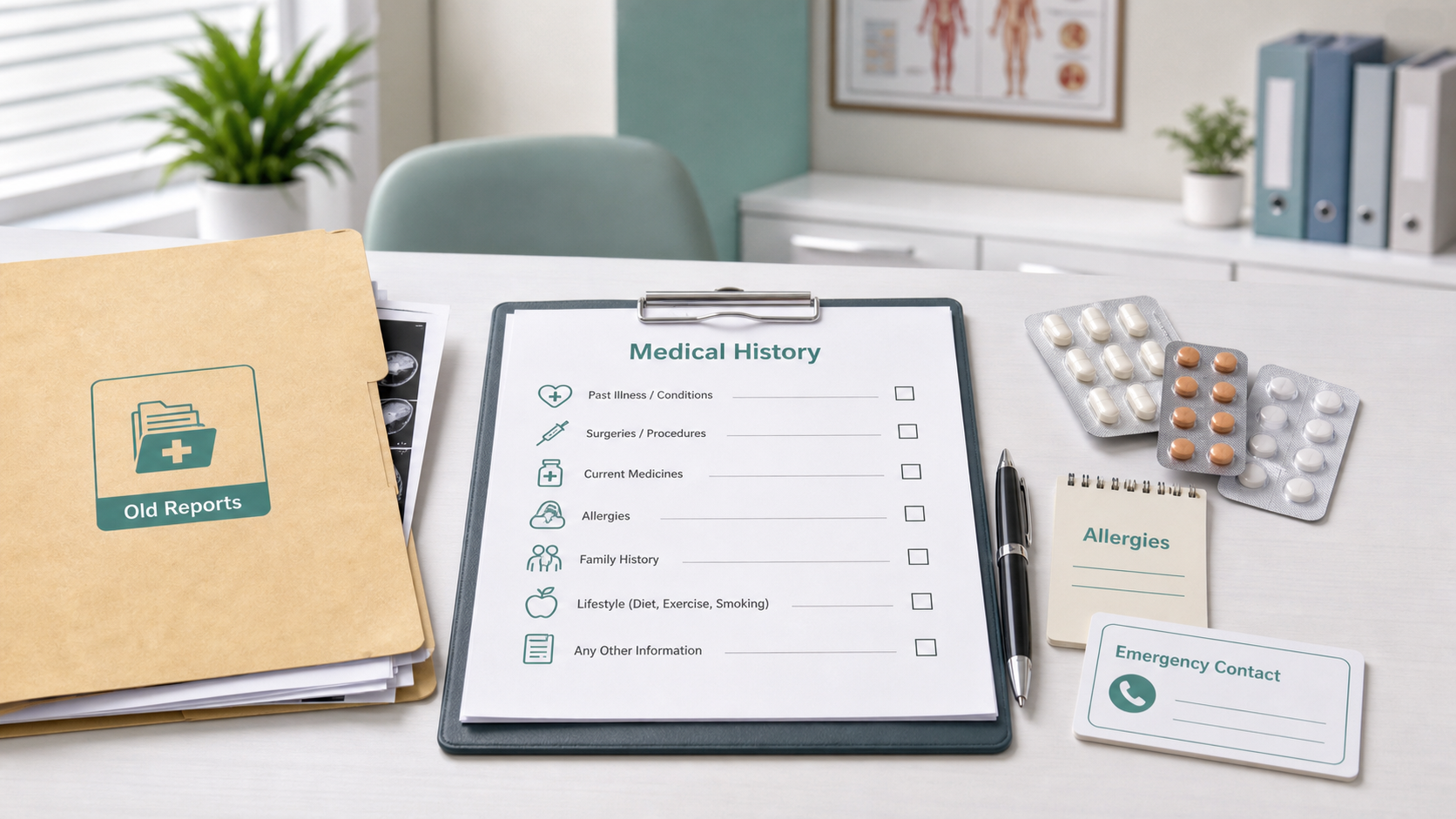
Fast rule: before a doctor visit, prepare a one-page medical history with seven lines: main symptom, timeline, current medicines, allergies, old diseases, surgeries or admissions, and important family history. This helps the doctor ask better questions faster. It does not replace examination, testing, or personalized medical advice.
This article is patient education, not diagnosis or prescription advice. Do not start, stop, repeat, or change medicines based only on this page. If the patient has severe chest pain, major breathing difficulty, fainting, confusion, stroke-like symptoms, seizure, severe abdominal pain, heavy bleeding, blue lips, serious injury, poisoning, severe allergy, or a rapidly worsening condition, seek emergency care instead of waiting for a routine appointment. R.K. Hospital, Indrapuri, Bhopal has 24/7 emergency support; call 0755-4260605 for urgent help.
What is medical history for a doctor visit?
Medical history for a doctor visit is the patient's health background: current symptoms, past illnesses, medicines, allergies, surgeries, admissions, reports, family health problems, pregnancy details when relevant, and habits that may affect care. It helps the doctor understand risk and context, but it is not a self-diagnosis.
The MedlinePlus guide on talking with your doctor recommends preparing questions and sharing clear information before a medical visit. The NIH guidance on talking with a health care provider also advises patients to be honest about medicines, supplements, symptoms, and concerns.
If your documents are scattered, first use the OPD visit documents checklist. If you are nervous about what to say in the consultation room, use this 60-second guide to explaining symptoms.
When you have several symptoms or chronic conditions, a medical history alone is not enough to set the order of discussion. Use this priority checklist for a doctor visit with multiple health problems to identify the top concerns before OPD.
What should you write in a one-page medical history?
Write the information that can change medical decisions: what is happening now, what illnesses already exist, what medicines are being taken, what allergies or reactions happened before, and what major treatment has already been done. Keep it short enough that the doctor can scan it quickly.
Use this checklist:
| Medical history detail | What to write |
|---|---|
| Main problem today | Fever, pain, weakness, vomiting, breathing problem, bleeding, report review, pregnancy follow-up, or surgery opinion |
| Symptom timeline | Start date, severity, pattern, what worsened, and what helped or did not help |
| Current medicines | Tablet, syrup, inhaler, insulin, eye drops, supplements, and recently stopped medicines |
| Allergies or reactions | Medicine allergy, food allergy, injection reaction, anaesthesia reaction, rash, swelling, breathing trouble |
| Old diseases | Diabetes, BP, thyroid, asthma, heart, kidney, liver, seizure, cancer, TB, anemia, bleeding disorder |
| Surgeries or admissions | Operation name if known, hospital stay, discharge summary, implants, blood transfusion, ICU stay |
| Family history | Diabetes, BP, heart attack, stroke, kidney disease, cancer, bleeding disorder, sudden deaths in close relatives |
| Personal context | Pregnancy possibility, breastfeeding, alcohol/tobacco use, occupation exposure, recent travel, injury, animal bite, poisoning concern |
For a broader visit plan, read the doctor consultation preparation checklist. For questions to ask before leaving the room, use questions to ask doctor during appointment.
Why do medicines and allergies matter so much?
Medicines and allergies matter because they can affect symptoms, test results, interactions, bleeding risk, sugar/BP control, kidney safety, pregnancy safety, and the choice of next treatment. Guessing medicine names from memory is less useful than showing the strip, bottle, prescription, or a clear photo.
Tell the doctor about:
- prescription medicines for diabetes, BP, thyroid, heart, asthma, kidney disease, seizures, pain, mental health, or blood thinning
- painkillers, fever medicines, antibiotics, cough syrups, acidity medicines, steroids, sleeping pills, or allergy tablets taken recently
- insulin pens, inhalers, eye drops, creams, injections, supplements, gym products, ayurvedic medicines, homeopathy, or herbal products
- medicine allergy, swelling after tablets, breathing difficulty, severe rash, fainting, or previous injection reaction
- missed doses, accidental extra doses, recently stopped tablets, or old prescriptions repeated at home
This is not a medicine instruction. It is a safer way to share information so your treating doctor can decide. If names are confusing, prepare a medicine list for doctor visit before OPD.
Which old diseases should you mention even if they are controlled?
Mention old or controlled diseases because they still affect risk, test interpretation, medicine choices, and follow-up timing. A stable diabetes or BP history can matter even when today's visit is for fever, stomach pain, surgery opinion, pregnancy review, or a blood report.
Do not skip:
- diabetes, high BP, thyroid disease, asthma, COPD, heart disease, kidney disease, liver disease, seizure disorder, stroke, cancer, TB, HIV, hepatitis, anemia, bleeding disorder, or clot history
- pregnancy, previous C-section, miscarriage history, high-risk pregnancy history, or breastfeeding when relevant
- previous surgery, anaesthesia reaction, blood transfusion, ICU admission, major injury, implant, stent, pacemaker, dialysis, or long hospital stay
- recent dengue, malaria, typhoid, COVID, pneumonia, urinary infection, jaundice, severe dehydration, or sepsis-like admission
For report review, bring older values too. One abnormal number is less useful than a trend with symptoms. If your visit is mainly for a blood report, the blood test report guide explains why doctors compare units, reference ranges, symptoms, medicines, and older reports.
How should family history be shared with a doctor?
Family history means important diseases in close blood relatives that may affect a patient's risk or screening discussion. It is usually most relevant when relatives had diabetes, high BP, heart attack, stroke, kidney disease, cancer, bleeding disorders, clotting problems, sudden unexplained death, or inherited conditions.
The CDC family health history guidance explains that family health history can help identify people with higher chances of some conditions. The MedlinePlus family history resource also notes that shared genes, environment, and habits can influence health risks.
Write family history simply:
- "Father had diabetes and kidney disease."
- "Mother had high BP and stroke at 58."
- "Two close relatives had heart attack before 50."
- "Sister had breast cancer."
- "Family history of bleeding problem during surgery."
Do not use family history to diagnose yourself. Use it as context for the doctor, especially when symptoms, age, reports, or planned surgery make risk assessment important.
What should different patients add to their history?
Every patient needs the basics, but some situations need extra details. Children, elderly patients, pregnant patients, chronic disease patients, and surgery patients often need information that one family member may remember better than the patient.
Use this decision table:
| Patient or visit type | Extra history to add |
|---|---|
| Elderly patient | confusion, falls, urine changes, walking support, memory issues, hearing/vision problems, caregiver notes |
| Child visit | birth history if relevant, vaccination record, weight, feeding, urine, fever medicine timing, previous admissions |
| Pregnancy visit | last menstrual period, pregnancy file, scan reports, bleeding, pain, BP/sugar history, previous C-section or complications |
| Diabetes or BP review | home readings, missed doses, diet changes, low sugar episodes, kidney/eye/heart reports if available |
| Surgery opinion | old scans, previous surgery, anaesthesia reaction, blood thinners, diabetes/BP control, allergy history |
| Fever or infection-like illness | fever chart, travel, mosquito exposure, urine symptoms, cough, rash, vomiting/loose motion, medicines already taken |
For elderly patients, use the elderly parent doctor visit checklist. For surgery preparation, use the surgery preparation checklist before admission or planned procedure discussion.
What should you not hide from the doctor?
Do not hide details because they feel embarrassing, self-started, old, or unrelated. Many details only become medically useful when the doctor connects them with symptoms, examination, reports, age, medicines, and risk factors.
Mention clearly:
- self-medication, old prescription reuse, antibiotics taken before tests, painkiller overuse, steroid use, or supplement use
- missed periods, pregnancy possibility, abortion pills, emergency contraceptive use, breastfeeding, or vaginal bleeding when relevant
- alcohol, tobacco, substance use, poisoning, overdose, self-harm concern, or accidental extra dose
- blood in vomit, stool, urine, cough, or vaginal bleeding
- falls, head injury, fainting, seizure, animal bite, burns, or workplace exposure
- previous serious diagnosis, surgery, admission, or report that the family is worried about
The purpose is not judgement. The purpose is safety. A hidden medicine, allergy, pregnancy possibility, or bleeding detail can change what tests, medicines, observation, or referral may be appropriate.
When should you choose emergency instead of routine OPD?
Do not delay emergency care to complete a perfect medical history when the patient has serious warning signs or is rapidly worsening. Carry whatever details are ready, but reach medical care first.
Go to emergency care now for:
- severe chest pain, pressure, sweating, fainting, or pain spreading to arm, jaw, or back
- severe breathlessness, blue lips, noisy breathing, or inability to speak full sentences
- sudden face drooping, one-sided weakness, speech difficulty, severe imbalance, or sudden vision change
- confusion, seizure, unusual drowsiness, or loss of consciousness
- severe abdominal pain, rigid abdomen, repeated vomiting, or blood in vomit or stool
- heavy bleeding, serious injury, burns, poisoning, suspected overdose, or fracture with deformity
- fever with stiff neck, confusion, seizure, severe weakness, very low urine, or rapid worsening
- child, elderly patient, pregnant patient, diabetic patient, or heart/kidney patient becoming suddenly worse
The CDC describes sepsis as a medical emergency linked to the body's extreme response to infection. Families should not try to diagnose sepsis at home, but fever or infection with confusion, severe weakness, breathlessness, very low urine, or rapid worsening needs urgent assessment.
For emergency flow, read what happens in a hospital emergency room. For sudden confusion, unusual drowsiness, or a hard-to-wake state, use the confusion and drowsiness emergency guide. For stroke-like symptoms, use the FAST stroke symptoms guide. For severe abdominal pain, use this hospital warning-sign guide.
What is the fastest 5-minute medical history format?
If you have only five minutes, write the medical history as seven short lines and carry medicine photos. This is enough to make the consultation clearer without delaying urgent care.
Copy this:
- Main problem today: ________
- Started on and changed how: ________
- Medicines already taken: ________
- Regular medicines: ________
- Allergies or previous reactions: ________
- Old diseases, surgeries, admissions: ________
- Pregnancy/family history/other important detail: ________
Then add three questions:
- What should we watch for at home?
- Which reports or tests matter now?
- When should we follow up or come urgently?
If the patient is stable, this small note can save time and confusion. If the patient is unstable, go to emergency first and share the details verbally.
Where can you come for doctor consultation in Bhopal?
R.K. Hospital, Indrapuri, Bhopal provides OPD consultation, diagnostics, General Medicine, General and Laparoscopic Surgery, Gynecology, Radiology, Pathology, and 24/7 emergency support under one roof. For routine OPD, bring your medical history note, reports, medicine list, allergies, and questions. For emergency warning signs, come to emergency without delay.
Use the services page to understand available departments, review doctors at R.K. Hospital, or visit the contact page for appointment and location details.
For urgent help, call 0755-4260605. If symptoms are severe or rapidly worsening, seek emergency care first instead of spending time making the perfect list.
For a first appointment with a new clinician, combine this history with the first doctor visit checklist so medicines, reports, questions, and follow-up details stay in one place.
Frequently Asked Questions
If your reports are spread across paper files and phone messages, use this guide to organize medical records for a doctor appointment before completing your history checklist.
What medical history should I tell my doctor?
Tell your main symptom timeline, current medicines, allergies, old diagnoses, surgeries, admissions, pregnancy status if relevant, family history, recent reports, and any warning signs such as chest pain, breathlessness, fainting, confusion, seizure, heavy bleeding, or rapid worsening.
Should I tell the doctor about old diseases that are controlled now?
Yes. Diabetes, blood pressure, thyroid disease, asthma, heart disease, kidney disease, liver disease, seizures, pregnancy history, previous surgery, and past admissions can still affect test choices, medicine safety, and follow-up planning.
Should I mention medicines I took without prescription?
Yes. Tell the doctor about self-started painkillers, fever medicines, antibiotics, antacids, steroids, supplements, herbal medicines, and old prescriptions. Do not start, stop, or repeat medicines based only on this article.
When should I go to emergency instead of waiting for OPD?
Use emergency care for severe chest pain, major breathing difficulty, stroke-like symptoms, fainting, confusion, seizure, severe abdominal pain, heavy bleeding, blue lips, serious injury, poisoning, or rapid worsening.
Need Medical Advice?
This article is for informational purposes only. For personalized medical advice, please consult a doctor at R.K. Hospital & Research Centre.
Book Appointment: 0755-4260605