Standing Up Par Chakkar: Orthostatic Hypotension Kab Emergency Hai
Khade hote hi chakkar ya aankhon ke aage andhera kyun hota hai? Orthostatic hypotension, safe next steps, doctor visit checklist aur emergency signs samjhein.
Chair ya bed se uthte hi chakkar, halka-pan, dhundhla dikhna, ya aankhon ke aage andhera aana frightening ho sakta hai. Kabhi episode kuch seconds mein settle ho jata hai; kabhi yeh dehydration, bleeding, medicine effect, heart problem, infection, or another illness ka warning sign ho sakta hai.
Fast rule: turant dobara chalne ki koshish na karein. Safely baith ya let jayein, fall se bachein, aur episode ke symptoms note karein. Fainting, chest pain, saans ki dikkat, one-sided weakness, speech change, severe confusion, bleeding, or rapid worsening ho toh emergency care lein.
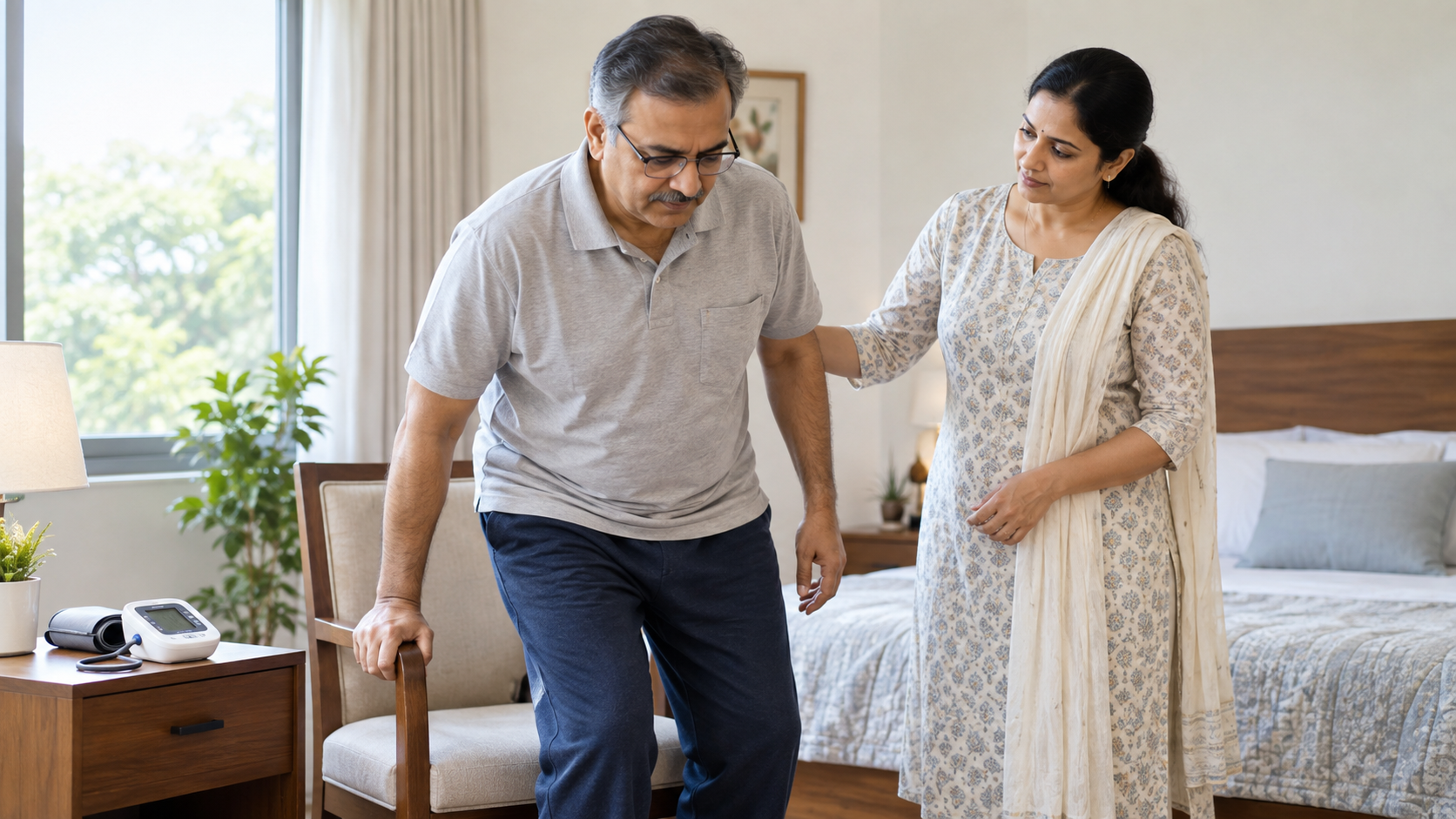
This article is general patient education, not diagnosis or prescription advice. Do not change medicines, salt, or fluid intake without clinician guidance—especially if you have heart, kidney, liver, blood-pressure, or pregnancy-related concerns.
Khade hote hi chakkar kyun aata hai?
Standing suddenly can cause a temporary fall in blood returning to the heart and blood reaching the brain. The body normally compensates quickly. If that response is delayed or another problem is present, a person may feel light-headed, weak, unsteady, nauseated, or close to fainting.
Possible contributors include:
- dehydration after heat, fever, vomiting, diarrhea, fasting, or poor intake
- prolonged bed rest, recent illness, or recovery after surgery
- blood loss, including heavy periods or hidden digestive-tract bleeding
- medicines that affect blood pressure, heart rate, fluid balance, mood, sleep, or urination
- heart rhythm or heart-pumping problems
- anemia, low blood sugar, infection, or hormonal and nervous-system conditions
- pregnancy-related circulation changes
- diabetes-related autonomic nerve changes
These possibilities overlap, so symptoms alone cannot identify the cause. If vomiting, diarrhea, heat exposure, or low urine is present, also read dehydration symptoms in adults. For a broader low-pressure overview, see low BP symptoms in Hindi.
Orthostatic hypotension kya hai?
Orthostatic hypotension is a sustained drop in blood pressure after a person moves to an upright position. Clinicians generally define it as a fall of at least 20 mm Hg systolic or 10 mm Hg diastolic within three minutes of standing, using a standardized measurement process.
The American Heart Association scientific statement describes this definition and stresses that orthostatic hypotension can have several patterns and causes. The Mayo Clinic overview notes that occasional mild episodes may have simple triggers, while frequent symptoms can signal a medical problem.
A single home reading does not confirm the condition. Technique, cuff size, timing, recent activity, hydration, and medicines can change results. A clinician may check blood pressure and pulse after rest and again while standing, then decide whether blood tests, ECG, or another assessment is appropriate.
Light-headedness, vertigo, aur imbalance mein kya difference hai?
“Chakkar” can describe different sensations, and the distinction helps a clinician choose the right evaluation. Light-headedness feels like faintness; vertigo feels like you or the room is spinning; imbalance feels like unsteadiness while standing or walking.
| What you feel | Useful description for the doctor | Common context to note |
|---|---|---|
| Faint, dim vision, about to black out | Light-headedness or presyncope | Standing up, heat, poor intake, bleeding, medicines |
| Room or body seems to spin | Vertigo | Head movement, ear symptoms, nausea |
| Legs feel unstable without spinning | Imbalance | Weakness, joint issues, medicines, neurological symptoms |
| Complete loss of consciousness | Fainting or syncope | Duration, injury, seizure-like movements, recovery time |
Do not use this table to diagnose yourself. A person can have more than one sensation, and serious causes may present atypically.
Episode ke waqt safest next step kya hai?
The immediate goal is to prevent a fall and notice emergency symptoms—not to force the body through the episode. Sit or lie down safely, ask someone to stay nearby, and avoid stairs, bathrooms with slippery floors, driving, or operating machinery until stable.
Use this short checklist:
- Stop walking and sit or lie down somewhere safe.
- If a fall occurred, check for head injury, severe pain, bleeding, or inability to move normally.
- Note whether there is chest pain, breathlessness, weakness on one side, speech or vision change, confusion, or fainting.
- Record when the episode began, how long it lasted, and what you were doing.
- If safe and already part of your clinician's plan, record BP and pulse without repeatedly testing in panic.
- Arrange medical review for repeated, worsening, or unexplained episodes.
Do not start extra salt, large amounts of fluid, caffeine, supplements, or leftover medicines as a universal fix. These can be inappropriate for people with heart, kidney, liver, pregnancy, or blood-pressure conditions.
Standing dizziness kab emergency hai?
Emergency assessment is safer when standing-related dizziness occurs with fainting, chest symptoms, neurological changes, major bleeding, severe dehydration, serious injury, or rapid deterioration. Do not wait for another BP reading if the person appears seriously unwell.
Go to the nearest emergency department or call local emergency help for:
- fainting, repeated collapse, or difficulty waking
- chest pain, major breathlessness, blue lips, or a very irregular/rapid heartbeat with illness
- new face droop, one-sided weakness or numbness, trouble speaking, severe confusion, or sudden vision loss
- seizure, sudden severe headache, or persistent vomiting
- black stool, blood in stool, vomiting blood, heavy vaginal bleeding, or another major blood loss
- cold clammy skin, very low urine, severe weakness, or rapid worsening
- fall with head injury, severe pain, deformity, or inability to stand
- pregnancy with fainting, abdominal pain, bleeding, breathlessness, or severe weakness
The NHS guidance on low blood pressure recommends medical review for recurring symptoms such as dizziness and fainting. Stroke-like symptoms need immediate care; use the FAST stroke warning-sign guide and do not drive yourself.
Doctor ko kya information deni chahiye?
A short timeline is more useful than saying only “BP low tha.” Record the position change, exact sensation, duration, BP/pulse if safely available, related symptoms, fluid loss, bleeding clues, meals, illness, and medicine timing.
Bring or note:
- when symptoms began and how often they occur
- whether they follow standing, meals, urination, heat, exercise, or long bed rest
- light-headedness versus spinning versus imbalance
- fainting, falls, injuries, chest symptoms, palpitations, breathlessness, headache, or neurological changes
- vomiting, diarrhea, fever, low urine, heavy periods, black stool, or visible bleeding
- diabetes, anemia, heart, kidney, liver, neurological, or pregnancy history
- every prescription, over-the-counter medicine, supplement, and recent dose change
- home BP/pulse records and the monitor, if your clinician asked for them
Use the home blood pressure log guide for consistent records and the medicine list checklist to avoid missing tablets or supplements.
Kya medicines dizziness when standing up cause kar sakti hain?
Some medicines can contribute to postural dizziness, but stopping them without advice can be dangerous. Blood-pressure medicines, diuretics, certain heart medicines, sedatives, some antidepressants, prostate medicines, and other drugs may affect pressure, pulse, alertness, or fluid balance.
Do not skip, halve, double, or discontinue a medicine to test a theory. Instead, tell the prescribing clinician:
- medicine name and strength
- dose time relative to the episode
- recent additions or dose changes
- missed or accidental extra doses
- non-prescription cold/pain medicines, herbal products, alcohol, or supplements
The clinician can balance symptom risk against the reason the medicine was prescribed and decide whether monitoring, tests, timing changes, or another plan is appropriate.
RK Hospital mein evaluation kaise hota hai?
R.K. Hospital, Indrapuri, Bhopal provides General Medicine consultation, diagnostic support, and 24/7 emergency assessment for dizziness, fainting, falls, dehydration, bleeding concerns, and related symptoms. The evaluation depends on the history and may include lying/standing vital signs, examination, blood sugar, blood tests, ECG, or other tests when clinically indicated.
For stable recurring symptoms, review R.K. Hospital doctors, explore hospital services, or use the contact page. Call 0755-4260605 for appointment and location guidance. Severe warning signs need the nearest emergency department immediately, not a routine appointment.
Frequently Asked Questions
Khade hote hi chakkar kyun aata hai?
Suddenly standing can briefly lower blood flow to the brain. Dehydration, prolonged bed rest, blood loss, illness, some medicines, heart problems, diabetes-related nerve changes, or orthostatic hypotension may contribute. Repeated or severe episodes need clinician assessment rather than self-diagnosis.
Orthostatic hypotension kya hai?
Orthostatic hypotension is a sustained blood-pressure fall after standing. Clinicians generally define it as a drop of at least 20 mm Hg systolic or 10 mm Hg diastolic within three minutes of standing, measured with a proper protocol. Symptoms and the underlying cause also matter.
Standing dizziness mein emergency kab jaana chahiye?
Seek emergency care for fainting, chest pain, major breathlessness, new weakness or numbness, trouble speaking, severe confusion, seizure, black or bloody stool, vomiting blood, heavy bleeding, serious injury, or rapid deterioration. Do not drive yourself if you may faint.
Kya BP medicine apne aap band kar deni chahiye?
No. Do not stop, skip, double, or change blood-pressure, heart, diabetes, psychiatric, prostate, or other medicines based on this article. Record symptoms and medicine timing, then ask the prescribing clinician to review the complete list.
Bottom line
Khade hote hi chakkar ko sirf “BP low” maan lena unsafe hai. Safely sit or lie down, prevent falls, describe the exact sensation, and arrange clinician review if episodes repeat. Fainting, chest pain, breathlessness, stroke-like symptoms, bleeding, serious injury, or rapid worsening means emergency care now.
Related Pages on R.K. Hospital
Read Next
- Chikungunya Symptoms in Hindi: Joint Pain, Bukhar, TestGeneral Medicine · 9 min read
- Viral Fever Lakshan in Hindi: Hospital Kab JayeinGeneral Medicine · 10 min read
- Malaria Symptoms in Hindi: Bukhar, Thand Lagna, TestGeneral Medicine · 9 min read
- Home Blood Pressure Log for a Doctor Visit: What to Record and BringGeneral Medicine · 10 min read
Need a Doctor in Bhopal? Talk to R.K. Hospital
This article is for general information only and does not replace a consultation. Call, WhatsApp, or walk in 24x7 at R.K. Hospital, Indrapuri, near Bima Hospital.
226, C-Sector, Indrapuri, Raisen Road, Bhopal (M.P.) 462022 · Directions & timings · 24x7 Emergency