Pulse Oximeter Reading: When Is Low Oxygen an Emergency?
Pulse oximeter reading guide for Bhopal families: normal SpO2 range, how to recheck at home, warning signs, and when low oxygen needs emergency care.
Ghar par pulse oximeter rakhna helpful ho sakta hai, but the number can also create panic or false comfort. The useful question is not just "reading kitni hai?" It is: is the patient breathing comfortably, alert, and stable, or is this a warning sign that needs emergency care?
Fast rule: if a correctly checked pulse oximeter reading is below 90%, or any reading comes with breathlessness, blue lips, chest pain, fainting, confusion, severe drowsiness, inability to speak normally, or rapid worsening, seek emergency care now. Do not try to treat low oxygen at home first.
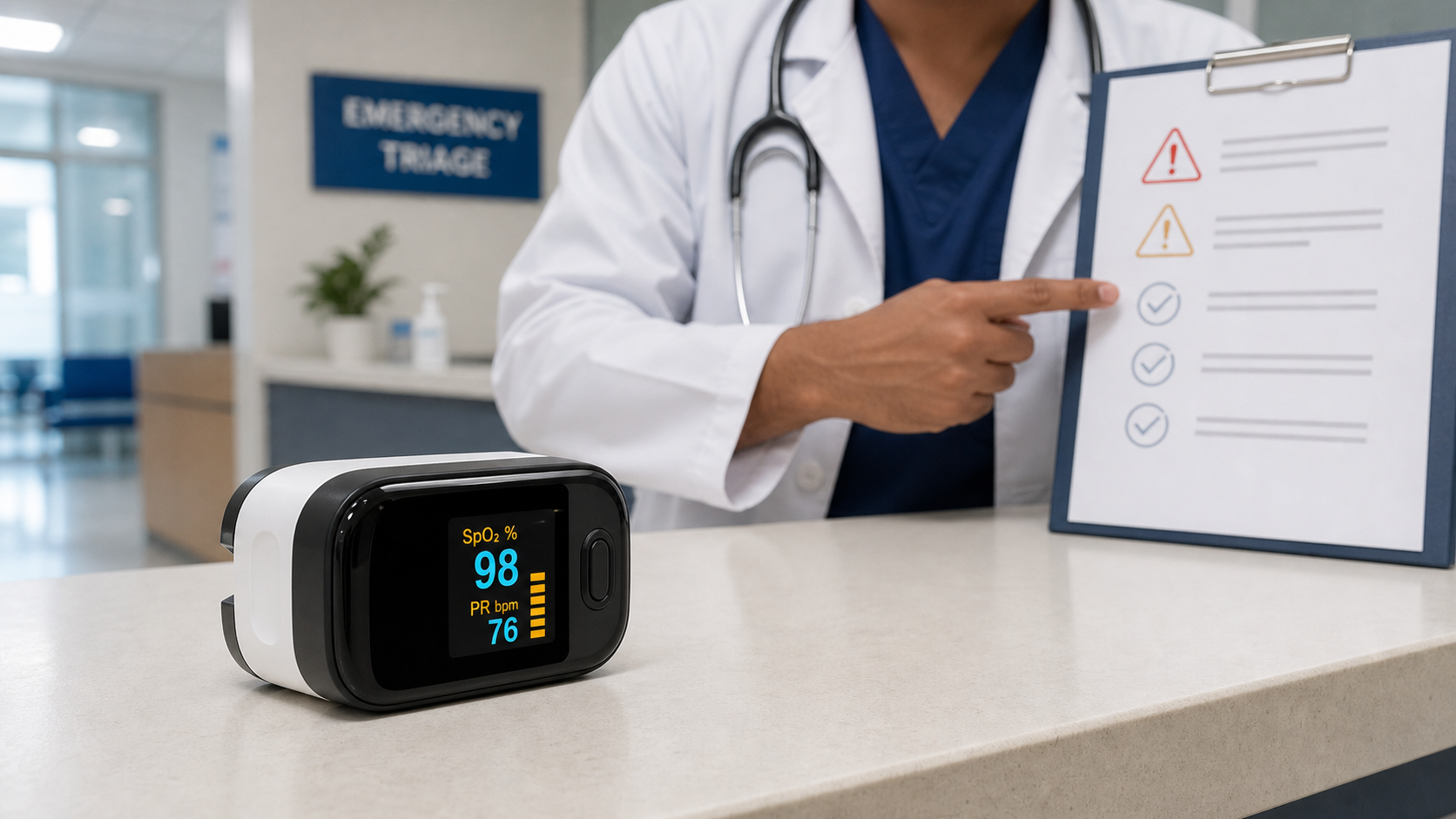
This article is general patient education, not diagnosis or prescription advice. Do not start oxygen, antibiotics, steroids, sedatives, nebulization, or extra medicines unless a doctor has advised that exact plan for that patient. R.K. Hospital, Indrapuri, Bhopal has 24/7 emergency support; for urgent help call 0755-4260605.
What is a pulse oximeter reading?
A pulse oximeter reading is an estimate of oxygen saturation, usually shown as SpO2, plus pulse rate. SpO2 means the percentage of hemoglobin in the blood that is carrying oxygen. It is a useful screening reading, but it is not the same as a full diagnosis.
A fingertip pulse oximeter shines light through the finger and estimates oxygen saturation from the signal. Doctors may use the number along with breathing effort, respiratory rate, pulse, blood pressure, temperature, chest findings, alertness, and medical history.
The FDA pulse oximeter guide explains that oxygen saturation values are usually 95% to 100% for most healthy people, while some people with lung or heart problems may have lower values. MedlinePlus pulse oximetry guidance gives a similar normal range and advises watching symptoms of low oxygen, not only the number.
What pulse oximeter reading is an emergency?
Treat a low or falling SpO2 reading as urgent when it is below 90%, when it keeps dropping, or when symptoms look serious even if the number is borderline. One dangerous symptom with a concerning reading is enough reason to seek emergency care.
Use this practical decision table:
| Pulse oximeter pattern | Safer action |
|---|---|
| 95% to 100%, patient comfortable and alert | Usually reassuring, but still watch symptoms and follow doctor advice for known disease |
| 92% to 94%, new illness, cough, fever, chest discomfort, or weakness | Same-day doctor review or urgent OPD, especially in elderly, pregnant, child, heart/lung patient, or diabetic patient |
| Around 90% to 91%, repeated correctly, or falling from usual baseline | Urgent medical assessment; do not delay if symptoms are present |
| Below 90%, repeated correctly | Emergency care now |
| Any reading with blue lips, severe breathlessness, chest pain, fainting, confusion, severe drowsiness, or inability to speak full sentences | Emergency care now |
Mayo Clinic's hypoxemia overview describes healthy pulse oximeter values as 95% to 100% and values under 90% as low. The FDA also warns that home readings should be interpreted with symptoms and medical advice because devices have limitations.
How do I recheck a pulse oximeter reading at home?
Recheck the reading once or twice in a calm, correct way, but do not keep repeating for several minutes if the patient looks seriously unwell. A better technique can fix a false reading, but it should not delay emergency care.
Quick recheck checklist:
- make the patient sit still and rest for a few minutes if they are stable
- warm the hand if fingers are cold
- remove nail polish or artificial nail from the tested finger if possible
- place the probe fully on the finger as the device instructions show
- keep the hand still at heart level
- wait for the reading to settle instead of trusting the first flickering number
- compare with another finger if the reading seems surprising
- note SpO2, pulse rate, time, symptoms, and whether the number is falling
Call emergency help or come to hospital immediately if the patient is struggling to breathe, turning blue, becoming confused, fainting, severely weak, unusually drowsy, or unable to speak normally. In those situations, symptoms matter more than getting a perfect device reading.
Why can pulse oximeter readings be wrong?
Pulse oximeters can give inaccurate readings when the signal is poor or the device has limitations. Cold fingers, movement, nail polish, artificial nails, poor probe placement, low battery, poor circulation, bright light interference, and some patient factors can affect the number.
The FDA notes pulse oximeter limitations, including the risk of inaccurate readings and the need to consider symptoms. The FDA has also discussed accuracy differences across skin tones in its updated pulse oximeter recommendations. This does not mean the device is useless; it means families should avoid two mistakes:
- ignoring serious symptoms because one number looks okay
- panicking from one bad reading without rechecking correctly when the patient is otherwise stable
If the reading is unexpectedly low but the patient seems stable, recheck correctly and contact a doctor. If the patient has breathlessness, chest pain, confusion, blue lips, fainting, severe drowsiness, or rapid worsening, treat it as urgent.
Which symptoms matter more than the number?
A pulse oximeter is only one clue. Serious breathing, circulation, or brain-alertness symptoms should trigger urgent care even if the reading is normal or unavailable. Some patients can look very unwell before families understand what the number means.
Emergency warning signs include:
- breathing difficulty at rest
- inability to speak full sentences
- blue or grey lips, face, fingers, or nails
- chest pain, sweating, nausea, or fainting
- confusion, severe drowsiness, seizure, or collapse
- very fast breathing or noisy breathing
- severe weakness, cold/clammy skin, or very low urine
- high fever with breathlessness or rapid worsening
- child breathing fast, ribs pulling in, grunting, or looking exhausted
- elderly or pregnant patient with new breathlessness or falling SpO2
If breathlessness is the main symptom, read difficulty breathing: when should you go to the hospital. If chest pressure or left-side chest pain is present, use the chest pain and breathlessness emergency guide and seek urgent care. If cough, fever, balgam, wheezing, or chest discomfort are prominent, this lungs infection symptoms guide can help families explain the symptom pattern to the doctor.
What should you do before reaching hospital?
The safest path is to stop exertion, keep the patient upright, arrange emergency transport, and bring the reading history. Avoid home experiments when oxygen is low or symptoms are changing.
Before reaching hospital:
- keep the patient sitting upright or in their most comfortable breathing position
- stop walking, stairs, exercise, or heavy work
- do not let the patient drive
- note SpO2 readings, pulse rate, time, and symptoms
- bring current medicines, inhalers, allergies, old reports, discharge summaries, ECGs, X-rays, and oxygen records
- tell the team about asthma, COPD, heart disease, kidney disease, diabetes, pregnancy, recent surgery, long travel, fever, cough, or chest pain
- avoid giving oxygen, sedatives, antibiotics, steroids, painkillers, or extra inhaler doses unless already prescribed for that exact situation by a doctor
If the patient becomes unconscious, is not breathing normally, or has no pulse, call emergency services immediately and follow dispatcher instructions for CPR if you are trained or guided.
What will doctors check for low oxygen in the emergency room?
In the emergency room, doctors first check whether oxygen, breathing effort, circulation, and alertness are stable. They may start urgent support while also looking for the reason the oxygen reading is low.
Depending on the patient, the team may check:
- oxygen saturation with a hospital monitor
- respiratory rate, pulse, blood pressure, temperature, and blood sugar
- chest sounds, heart signs, hydration, alertness, and skin color
- ECG if chest symptoms or risk factors are present
- blood tests, chest X-ray, infection tests, kidney/liver tests, or other investigations when clinically needed
- observation, admission, referral, or discharge instructions based on stability and findings
For a step-by-step explanation of triage and monitoring, read what happens in a hospital emergency room. If the oxygen drop is happening with fever and severe weakness, the blood infection and sepsis warning signs guide explains why confusion, low urine, breathlessness, or rapid worsening should not wait.
When should Bhopal families come to R.K. Hospital?
Come to emergency care immediately if SpO2 is below 90%, repeatedly falling, or paired with breathlessness, blue lips, chest pain, fainting, confusion, severe drowsiness, inability to speak normally, or rapid worsening. For stable but concerning readings, book a same-day doctor review instead of repeatedly guessing at home.
R.K. Hospital, Indrapuri, Bhopal provides 24/7 emergency assessment, oxygen support, vitals monitoring, ECG, pathology testing, X-ray support, physician review, and referral guidance when needed. The practical goal is not to self-diagnose the cause; it is to decide whether the patient needs urgent assessment and stabilization.
For urgent help, call 0755-4260605 or visit the emergency department. For non-emergency appointments, use the contact page or review available hospital services.
FAQ
Pulse oximeter reading normal kitni hoti hai?
Most healthy people usually show SpO2 around 95% to 100% at rest, but some people with chronic lung or heart disease may have a different doctor-advised range. A low or falling reading, especially with symptoms, should be checked by a doctor.
Pulse oximeter reading 90 se kam ho toh kya karein?
If a correctly repeated reading is below 90%, or the patient has breathlessness, blue lips, confusion, chest pain, fainting, severe drowsiness, or rapid worsening, seek emergency care immediately. Do not wait at home to see if it improves.
Can a pulse oximeter give a wrong reading?
Yes. Cold fingers, movement, nail polish, artificial nails, poor probe position, low battery, poor circulation, and device limitations can affect readings. Recheck correctly, but do not ignore serious symptoms just because one reading looks normal.
Should I give oxygen at home for low SpO2?
Do not start oxygen, nebulization, sedatives, antibiotics, steroids, or extra medicines at home unless a doctor has advised that exact plan for that patient. Low oxygen with symptoms needs urgent medical assessment.
Bottom line
A pulse oximeter reading is useful only when it is checked correctly and interpreted with the patient's symptoms. Below 90%, a falling reading, or any reading with breathlessness, blue lips, chest pain, fainting, confusion, severe drowsiness, or rapid worsening should be treated as urgent.
R.K. Hospital, Indrapuri, Bhopal has 24/7 emergency support for low oxygen readings, breathing difficulty, chest pain, fainting, severe weakness, fever warning signs, and other urgent symptoms. Call 0755-4260605 or come to the emergency department when warning signs are present.
Need Medical Advice?
This article is for informational purposes only. For personalized medical advice, please consult a doctor at R.K. Hospital & Research Centre.
Book Appointment: 0755-4260605